
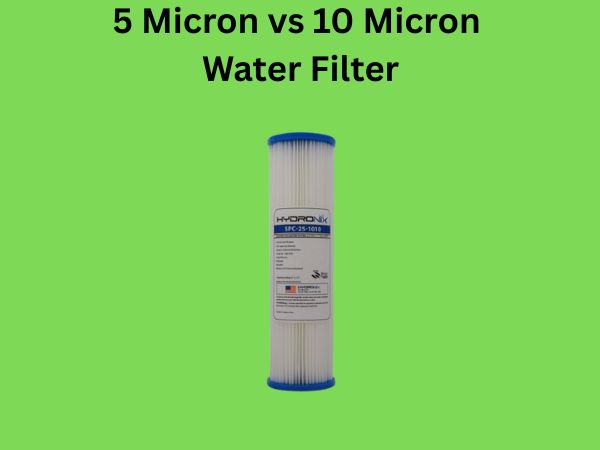
5 Micron vs 10 Micron Water Filter: Which Should You Use?
When you’re standing in front of water filter options, you might feel like you’re deciphering a foreign language. What does micron even mean? Why does it matter? And most importantly, which filter will actually give you the clean, safe drinking water your family deserves?
I get it. Water filtration can seem overwhelming, but here’s the thing—understanding the difference between a 5 micron and a 10 micron filter is simpler than you think. Think of microns like the holes in a fishing net. The smaller the holes, the more you catch. The same principle applies to water filters, and today, we’re going to break down exactly what you need to know.
Understanding Micron Ratings: The Basics
Before we dive into the 5 versus 10 micron debate, let’s establish what a micron actually is. A micron, also called a micrometer, is one millionth of a meter. To put this in perspective, a human hair is roughly 70 to 100 microns wide. When we talk about water filters, the micron rating tells you the smallest particle that the filter can theoretically catch.
Why Micron Size Matters
The micron rating of your water filter is crucial because it determines what stays in your water and what gets filtered out. A 5 micron filter has smaller pores than a 10 micron filter, which means it can trap smaller particles. However, smaller isn’t always better—there are trade-offs you need to understand.
Think of it this way: imagine you’re trying to separate sand from pebbles using a screen. If your screen holes are too small, nothing falls through, and the sand gets stuck on top. If the holes are too large, the sand slips right through. Water filters work on the same principle, and finding the right balance is essential.
The 10 Micron Filter: Understanding the Larger Option
A 10 micron water filter is often considered the entry-level or standard option for many household and commercial applications. It’s the more forgiving of the two when it comes to flow rate and pressure, making it a popular choice for people who don’t want to sacrifice water pressure.
What Does a 10 Micron Filter Remove?
A 10 micron filter is effective at removing larger particles and sediments from your water. Here’s what you can typically expect it to filter out:
- Sand and sediment particles
- Silt and dirt
- Some rust particles
- Larger bacterial clusters
- Visible cloudiness or turbidity
- Some algae particles
What it won’t remove are smaller contaminants like individual bacteria, viruses, or dissolved chemicals. If your water source is relatively clean to begin with, a 10 micron filter might be perfectly adequate for your needs.
Flow Rate Advantages of 10 Micron Filters
One of the biggest advantages of a 10 micron filter is that it maintains better water pressure and flow rates compared to its finer counterpart. If you’ve ever used a very fine filter, you might have noticed that your water comes out slower. That’s because the water has to work harder to push through those tiny pores. With a 10 micron filter, you get faster water delivery without sacrificing too much filtration quality.
The 5 Micron Filter: Going Finer
A 5 micron water filter is twice as fine as a 10 micron filter. This means it can catch particles that are half the size, providing more thorough filtration. It’s like switching from a tennis racket net to a badminton net—you’re catching much smaller objects.
Superior Filtration Capabilities
The 5 micron filter removes everything a 10 micron filter does, plus additional contaminants. Here’s the expanded list:
- All particles removed by 10 micron filters
- Smaller sediment particles
- Individual bacterial cells
- Some protozoa like cryptosporidium
- Finer silt and clay particles
- Some cyst-forming organisms
- Improved water clarity
If you’re particularly concerned about microbial contamination or your water source is questionable, a 5 micron filter offers that extra layer of protection. It’s especially useful if you’re drawing water from a well or a naturally sourced supply.
The Trade-Off: Flow Rate and Pressure
Here’s where the 5 micron filter shows its drawback. Because the pores are smaller, water takes longer to push through. You might notice your water pressure drops noticeably, especially if you have multiple taps running simultaneously. For some people, this reduced flow is a minor inconvenience. For others, it’s a deal-breaker.
Comparing Contaminant Removal: What Actually Gets Filtered
Sediment and Visible Particles
Both filters excel at removing visible sediment and particles. If your water comes out cloudy or discolored, either filter will improve clarity significantly. However, the 5 micron will do a slightly better job, resulting in crystal-clear water in most cases.
Bacterial Contamination
Here’s where the filters start to diverge more noticeably. Bacteria typically range from 0.5 to 5 microns in size. A 5 micron filter can catch most bacteria, while a 10 micron filter will let some slip through. However, neither filter completely removes all bacteria—for that, you’d need something finer like a 1 micron filter or a combination of filtration methods including ultraviolet light or reverse osmosis.
Viruses and Dissolved Chemicals
Neither a 5 micron nor a 10 micron filter will remove viruses or dissolved chemicals. Viruses are incredibly small, typically 0.004 to 0.1 microns. If you’re concerned about viral contamination or chemical pollutants, you’ll need additional filtration layers beyond mechanical filtration.
Cost Comparison: What’s the Price Difference?
Initial Purchase Price
Generally speaking, a 10 micron filter costs less upfront than a 5 micron filter. The difference isn’t huge—we’re talking maybe fifteen to thirty percent more for the 5 micron option. If you’re on a tight budget, this could be a deciding factor.
Replacement Filter Costs
The real cost difference emerges over time. Because 5 micron filters trap smaller particles, they fill up faster and need replacing more frequently. You might replace a 10 micron filter every six months, while a 5 micron filter in the same conditions might need replacement every three to four months. That doubles your annual filter costs right there.
Total Cost of Ownership
When you factor in replacement filters over several years, the 10 micron filter becomes the more economical choice for many households. Unless you specifically need the finer filtration, the 5 micron option could cost you significantly more over the long term.
Filter Lifespan and Replacement Frequency
How Long Do These Filters Last?
The lifespan of your filter depends on several factors: the quality of your incoming water, how much water you use, the specific filter model, and the micron rating. A 10 micron filter in a relatively clean water supply might last six to twelve months. The same scenario with a 5 micron filter might result in a lifespan of three to six months.
Signs It’s Time to Replace Your Filter
Your filter is telling you when it needs replacement. Watch for these signs:
- Water pressure drops noticeably
- Water starts looking cloudier despite filtering
- Unusual taste or smell develops
- You’ve hit the manufacturer’s recommended timeframe
- The filter housing shows cracks or leaks
Don’t wait until your water stops flowing—replace your filter when you notice the first signs of decline. Pushing a filter past its limit forces bacteria and particles back into your water.
Best Use Cases for Each Filter Type
When to Choose a 10 Micron Filter
A 10 micron filter is your best bet if:
- You have municipal water that’s already treated and relatively clean
- Water pressure is important to you
- You want lower ongoing maintenance and replacement costs
- You’re using it as a pre-filter before other filtration stages
- Your water only shows occasional sediment or cloudiness
- You have a large household with high water consumption
When to Choose a 5 Micron Filter
A 5 micron filter makes sense if:
- You’re drawing from a well or untreated water source
- You have concerns about bacterial contamination
- Your water shows frequent sediment or visible particles
- Water pressure isn’t a major concern for you
- You’re willing to replace filters more frequently for superior filtration
- You have a smaller household with lower water consumption
- You’re using it as part of a multi-stage filtration system
Installation and Maintenance Considerations
Is Installation Complicated?
Both 5 micron and 10 micron filters are typically installed in similar ways. Most come as part of a housing system that connects to your water line. Installation usually involves shutting off water, connecting the filter housing, and running water through to clear any debris. It’s not complicated, and most people can handle it themselves.
Maintenance Requirements
Maintenance is straightforward for both types. You’ll need to:
- Replace filters on schedule
- Check filter housings for leaks monthly
- Flush the system after filter changes
- Monitor water pressure and flow
The main maintenance difference is frequency—you’ll be replacing the 5 micron filter more often, which means more maintenance work overall.
Health and Safety Implications
Does Finer Filtration Mean Safer Water?
It’s tempting to think that finer is always safer, but the reality is more nuanced. A 5 micron filter provides superior protection against bacterial and particulate contamination compared to a 10 micron filter. However, if you’re concerned about the full spectrum of water contaminants—viruses, chemicals, fluoride, heavy metals—you need a more comprehensive approach than either option alone provides.
Health Risks Associated with Each Option
Using a 10 micron filter when your water source has significant bacterial contamination could leave you vulnerable to waterborne illnesses. Conversely, using a 5 micron filter won’t protect you from viruses or dissolved chemicals. Neither filter removes chlorine, though some versions have activated carbon that provides this function.
Environmental Impact of Your Choice
Waste Generation and Disposal
Here’s something people don’t always consider: the environmental impact of filter replacement. Since a 5 micron filter needs replacement twice as often as a 10 micron filter, you’re generating twice as much filter waste. If environmental consciousness matters to you, this is worth thinking about.
Water Waste and Sustainability
The 10 micron filter uses less water pressure, meaning it might waste less water during the filtration process. However, the difference is minimal for most household filters. Both options are reasonably sustainable choices compared to single-use plastic bottles.
Making Your Final Decision
Assessing Your Water Quality
The best way to decide between these filters is to understand your water quality first. If you have municipal water, ask your local water utility for a water quality report. If you have a well, consider getting water tested by a laboratory. Knowing what contaminants you’re actually dealing with will guide your choice.
Considering Your Priorities
What matters most to you? Is it maximum safety, lowest cost, best water pressure, or environmental impact? Your priorities should heavily influence your decision. There’s no one-size-fits-all answer because different people have different needs and constraints.
The Hybrid Approach
Many water-conscious households use both filters as part of a multi-stage system. A 10 micron filter serves as the pre-filter, catching larger particles and extending the life of the 5 micron filter that comes next. This approach gives you the benefits of both without excessive costs or pressure loss.
Conclusion
The choice between a 5 micron and a 10 micron water filter ultimately depends on your specific situation. A 10 micron filter is perfect if you have relatively clean water, need good water pressure, and want to minimize costs and maintenance. It’s an excellent choice for municipal water users or as a pre-filter in multi-stage systems.
A 5 micron filter is your answer if you’re drawing from a questionable water source, have concerns about bacterial contamination, or don’t mind more frequent filter replacements. It provides superior filtration of sediments and bacteria, though it does come with a trade-off in water pressure and cost.
Remember that neither filter is a complete solution for all water contaminants. If you have specific concerns about viruses, chemicals, or heavy metals, you’ll need additional filtration layers. But for basic sediment and bacterial protection, understanding this micron difference empowers you to make an informed choice that works for your household.
Frequently Asked Questions
Can I use a 5 micron filter if I’m concerned about low water pressure?
You can, but you might experience noticeably reduced water pressure. However, the severity depends on your water pressure to begin with and your system’s overall design. If you have strong incoming pressure, a 5 micron filter might only reduce it by ten to twenty percent, which many people find acceptable. If your pressure is already marginal, the 5 micron filter could be frustrating. You could also consider a larger filter cartridge, which has more surface area and maintains better flow rates.

![10 Best Affordable Under Sink Water Filter [2026]](https://waterans.com/wp-content/uploads/2026/06/10-best-affordable-under-sink-water-filter-2026-featured-768x432.jpg)
