
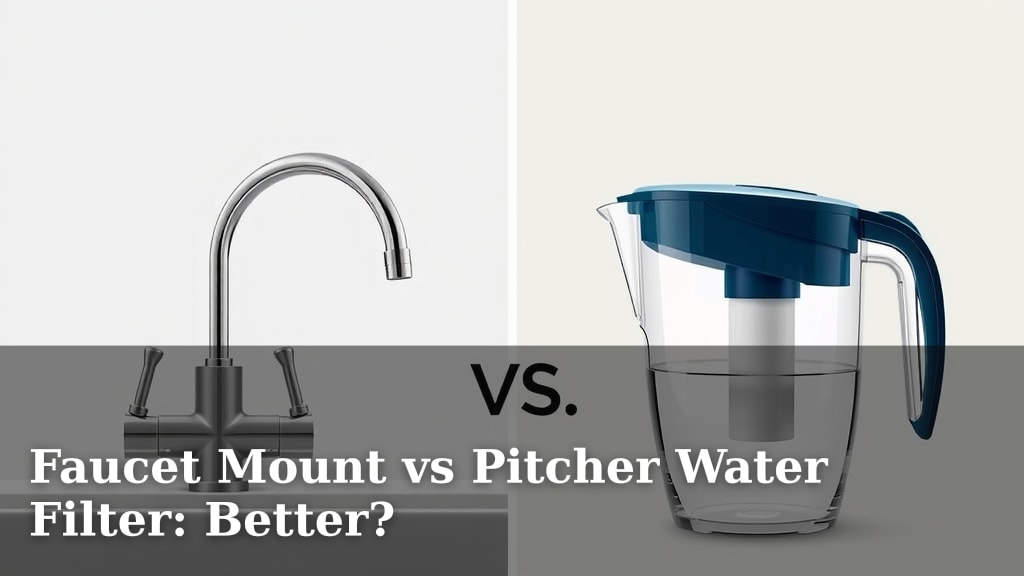
Faucet Mount vs Pitcher Water Filter: Better?
Deciding between a faucet water filter and a pitcher water filter depends on your needs for convenience and filtration power. Generally, a faucet filter offers instant filtered water directly from your tap for everyday use, while a pitcher filter is better for larger batches and portability. We found faucet filters typically remove more contaminants, but pitchers are simpler to use and move around.
Both options aim to improve your water quality. You might be wondering which is the best fit for your kitchen and your family’s health. We looked into how each type works, their common pros and cons, and what they can filter out. Understanding these differences helps you make a smart choice for cleaner, better-tasting water in your home. Consider your budget and installation willingness too.
- Faucet filters give you instant filtered water.
- Pitcher filters are good for bigger amounts of water.
- Faucet filters often clean water more thoroughly.
- Pitchers are easier to use and move.
- Think about cost and ease of setup.
Let’s walk through exactly how each type of filter stacks up so you can pick the right one for your home.
Comparing Faucet and Pitcher Water Filters
You’re looking for cleaner water, and that’s a fantastic goal! Deciding between a faucet filter and a pitcher filter can be tough. Both systems aim to make your tap water taste better and remove unwanted stuff. We’ve dug into the details to help you see which one fits your life best. Think about how much water you use, how much effort you want to put in, and what you want to filter out.
How Faucet Water Filters Work
A faucet filter attaches directly to your existing kitchen faucet. It’s a small device that sits right there. When you turn on the tap, the water flows through the filter cartridge inside. Most faucet filters have a switch or lever. This lets you choose between filtered and unfiltered water. So, you can still use regular tap water for washing dishes.
Installation and Convenience
Installation is usually pretty straightforward. You typically just screw the filter onto the end of your faucet. Many models don’t require any tools. You might need an adapter if your faucet is an unusual size. Once it’s on, you have filtered water on demand. No need to wait for a pitcher to fill up. This is a big plus if you use a lot of filtered water throughout the day.
Filtration Capabilities
Faucet filters often have more robust filtration systems. They can handle a wider range of contaminants. Research indicates they are good at reducing lead, chlorine, sediment, and certain pesticides (CDC). The larger filter size allows for more filtering material. This means they can often filter more water before needing a replacement cartridge. This can be a real money-saver over time.
Pros and Cons of Faucet Filters
- Pros: Instant filtered water, convenient for cooking and drinking, often better filtration, no counter space used, can last longer between changes.
- Cons: Can be bulkier on the faucet, may slow down water flow slightly, not portable, installation might be tricky for some faucets.
How Pitcher Water Filters Work
A water filter pitcher is exactly what it sounds like: a pitcher with a built-in filter. You fill the top reservoir with tap water. Gravity then pulls the water down through the filter. The filtered water collects in the main part of the pitcher below. It’s a simple, gravity-fed system that has been around for a while.
Ease of Use and Portability
Pitcher filters are incredibly easy to use. Just fill it up and wait. There’s no installation needed at all. You can easily move a pitcher from the fridge to the table. They don’t take up much counter space either. Many people prefer this simplicity. It feels less permanent than attaching something to your faucet.
Filtration and Capacity
Pitcher filters are great for reducing common impurities like chlorine. This leads to better-tasting water and can remove some sediment. Some advanced pitchers can also reduce heavy metals like lead and copper. However, their filtration capacity is generally less than faucet filters. The filter media is more compact. You’ll likely need to replace the filter cartridges more frequently than with a faucet system. Many guidelines suggest replacing them every 2-3 months (EPA).
Pros and Cons of Pitcher Filters
- Pros: No installation, portable, easy to use, can be stored in the fridge, good for smaller households or occasional use.
- Cons: Slower filtration process, need to wait for water, takes up fridge or counter space, smaller filter capacity, more frequent filter replacements needed.
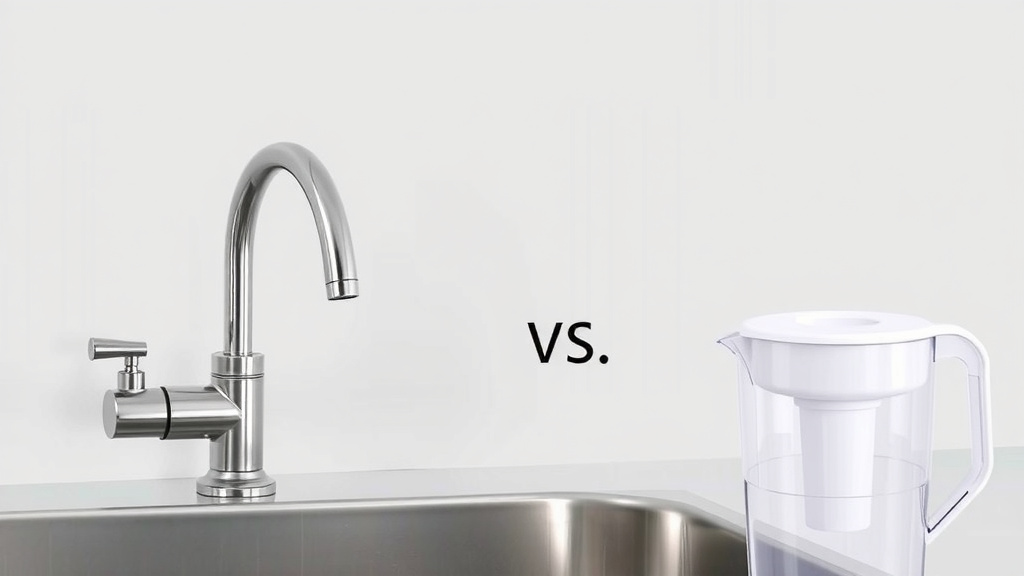
Making the Right Choice for Your Home
So, which filter is the champion for your kitchen? It really comes down to your personal habits and needs. Think about how much filtered water your family drinks and cooks with daily. Do you often find yourself running out of filtered water with a pitcher?
Consider Your Water Usage Habits
If you drink a lot of water, cook frequently with filtered water, or have a larger family, a faucet filter might be a better fit. You’ll have a constant supply without the waiting. For smaller households or individuals who only need a glass or two of filtered water now and then, a pitcher is perfectly adequate. It’s like choosing between a personal water bottle and a large dispenser.
Budget and Long-Term Costs
When we looked at the costs, faucet filters often have a higher upfront price. However, their replacement filters can sometimes last longer. This can make them more economical in the long run. Pitcher filters usually have a lower initial cost. But, you’ll be buying replacement filters more often. Do the math based on your expected usage. This can give you a clearer picture of the long-term expense.
Installation Preferences
Are you comfortable making minor adjustments to your faucet? If yes, a faucet filter is a great option. If you prefer a no-fuss, no-tools approach, a pitcher filter wins hands down. We found that many people choose based on their willingness to perform even simple installations.
Filtration Needs: What Do You Want to Remove?
Both filter types can improve taste by reducing chlorine. But if you have specific concerns about contaminants like lead or certain chemicals, research the specific filter model. Faucet filters generally offer a wider range of contaminant reduction due to their design. Always check the product specifications. They should list what specific contaminants they are certified to reduce.
Quick Checklist: Faucet vs. Pitcher
- Do you want water instantly? → Faucet
- Do you prefer no installation? → Pitcher
- Do you use a lot of filtered water? → Faucet
- Do you need portability? → Pitcher
- Are you concerned about specific contaminants? → Research both
- Do you want to save space on your counter? → Faucet
Conclusion
Choosing between a faucet and a pitcher filter comes down to your daily routine. If you need instant access to filtered water for cooking and drinking, a faucet filter is likely your best bet. It offers convenience and often more thorough contaminant reduction. For those who prefer simplicity, portability, or only need smaller amounts of filtered water occasionally, a pitcher filter is an excellent, easy-to-use option. Consider your water usage, budget, and how much effort you want to put into setup and maintenance. You can enjoy cleaner, better-tasting water by making the right choice for your home.
Frequently Asked Questions
Do faucet filters affect water pressure?
Yes, faucet filters can slightly reduce water pressure. This is because the water has to pass through the filter media. The amount of pressure drop varies by model. Some filters are designed to minimize this effect, so it’s worth checking reviews for specific products.
How often should I replace faucet and pitcher filters?
Faucet filter cartridges typically last longer, often 2-6 months or for a certain gallon capacity. Pitcher filters usually need replacing more frequently, about every 2-3 months. Always check the manufacturer’s recommendations for your specific model, as usage can affect lifespan.
Can I filter hot water with a faucet filter?
Most faucet filters are designed for cold water only. Filtering hot water can damage the filter cartridge and potentially release contaminants. Always check the product specifications to confirm if a faucet filter is safe for use with hot water, though it’s uncommon.
Are pitcher filters good for removing fluoride?
Standard pitcher filters are generally not effective at removing fluoride. Some specialized filters exist, but most pitcher filters focus on common impurities like chlorine and sediment. If fluoride removal is a priority, you’ll need to research specific pitcher or faucet filter models that are certified for it.
Which type of filter is more budget-friendly in the long run?
The long-term cost depends on your usage. Faucet filters have a higher upfront cost but replacement cartridges may last longer, potentially making them cheaper over time for heavy users. Pitcher filters have a lower initial cost, but frequent replacement filters can add up for households that use a lot of filtered water.

![10 Best Whole Home Water Filter [2026]](https://waterans.com/wp-content/uploads/2026/07/10-best-whole-home-water-filter-2026-featured-768x432.jpg)