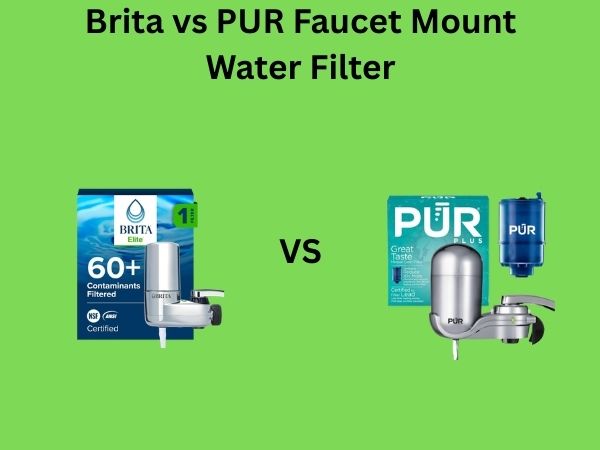
Brita vs PUR Faucet Mount Water Filter: Which Is Better for Kitchen Use?
When you’re standing in front of your kitchen sink, staring at your tap water, you might wonder: is this really safe to drink? If you’re asking yourself this question, you’re not alone. Millions of homeowners are turning to faucet-mounted water filters to improve their drinking water quality without breaking the bank or cluttering their countertops.
But here’s the thing—not all faucet filters are created equal. Two brands keep popping up in every conversation about water filtration: Brita and PUR. These household names have been battling it out in the water filter market for years, and choosing between them isn’t always straightforward.
In this comprehensive guide, I’m going to break down everything you need to know about Brita and PUR faucet-mounted filters. We’ll compare their performance, cost, installation process, and much more. By the end, you’ll have the clarity you need to make an informed decision for your kitchen.
Understanding Faucet-Mounted Water Filters: The Basics
Before we dive into comparing Brita and PUR, let’s talk about what faucet-mounted filters actually do. Think of them as gatekeepers for your tap water. They sit right on your faucet’s aerator, filtering every drop of water that flows through before it reaches your glass.
These filters work using activated carbon and sometimes ion exchange technology. When water passes through the filter, contaminants get trapped in the filter media while clean water flows through. It’s like water going through a microscopic maze where the bad stuff gets stuck and the good stuff makes it through.
Why Choose a Faucet-Mounted Filter?
You might be wondering why you’d choose a faucet-mounted filter over other options like pitcher filters or under-sink systems. The answer is simple: convenience and practicality. You get filtered water instantly without waiting for a pitcher to fill. You don’t need to install complicated plumbing. And you don’t have to store a bulky water pitcher in your refrigerator. It’s the middle ground that works for many households.
What Is Brita’s Faucet-Mounted Filter System?
Brita has been a household name in water filtration since the 1960s. Their faucet-mounted option is one of their newer innovations, designed to meet the growing demand for convenient, on-tap filtration without the hassle of pitcher refilling.
The Brita faucet filter is a sleek device that connects directly to your kitchen faucet. It features a dial that lets you switch between filtered and unfiltered water, so you can use unfiltered water for watering plants or washing dishes if you prefer. The design is relatively compact, and it doesn’t add much bulk to your faucet area.
Key Features of Brita Faucet Filters
- Reduces chlorine taste and odor
- Filters out certain sediments and particles
- Easy on-off switch for filtered and unfiltered water
- Compact, sleek design
- Compatible with most standard faucets
- Indicator light shows when filter needs replacement
What Is PUR’s Faucet-Mounted Filter System?
PUR is another trusted name in water filtration, and their faucet-mounted filter is engineered with similar convenience in mind. PUR positions their product as a comprehensive filtration solution that goes beyond just taste and odor improvement.
Like Brita, the PUR faucet filter attaches directly to your faucet’s aerator. However, PUR claims their filtration technology is more advanced, removing additional contaminants that some other filters miss. The device is also relatively small and unobtrusive on your sink.
Key Features of PUR Faucet Filters
- Removes more contaminants than many competitors
- Advanced filtration technology
- Reduces lead and other heavy metals
- Simple switch mechanism for filtered and unfiltered water
- Electronic filter life indicator
- Fits most standard faucets
Filtration Technology: What Each Filter Actually Removes
Here’s where things get interesting. Both Brita and PUR use activated carbon filtration, but their claims about what they remove differ slightly. Let me break this down for you in plain English.
Brita’s Filtration Technology
Brita’s faucet filter uses activated carbon to reduce chlorine taste and odor. The filter also catches some sediments and particles that can make your water look cloudy. Brita is straightforward about what their filter removes—they focus primarily on improving taste and odor rather than claiming to remove every possible contaminant.
According to Brita’s specifications, their faucet filter reduces:
- Chlorine (taste and odor)
- Some sediment particles
- Certain chemicals affecting water taste
PUR’s Filtration Technology
PUR goes a step further with their filtration approach. In addition to activated carbon, PUR uses ion exchange technology. This is where positively and negatively charged ions bind to contaminants, essentially trapping them in the filter media.
PUR claims their faucet filter reduces:
- Chlorine (taste and odor)
- Lead and other heavy metals
- Certain pesticides and industrial chemicals
- Sediments and particles
- Mercury
The Key Difference
The biggest difference? PUR claims to reduce lead and certain heavy metals, while Brita doesn’t emphasize this capability. If you live in an older home with aging pipes or have concerns about heavy metal contamination, this could be a significant factor in your decision.
Installation and Ease of Use: How Hard Is It Really?
Both Brita and PUR promise simple installation, but let’s talk about what that actually means in practice.
Brita Installation Process
Installing a Brita faucet filter is genuinely straightforward. You unscrew the aerator from your faucet, screw on the Brita filter assembly, and you’re done. Most people can do this in under five minutes without tools. The filter comes with adapters for different faucet types, so compatibility usually isn’t an issue.
The dial switch on the Brita is intuitive. Just turn it to switch between filtered and unfiltered water. Honestly, it’s hard to mess this up.
PUR Installation Process
PUR’s installation is equally simple. Same process—remove the aerator, attach the PUR filter assembly, and you’re filtering. The setup time is comparable to Brita, usually taking five minutes or less.
The switch mechanism on PUR is slightly different—it’s more of a sliding button rather than a dial—but the operation is just as intuitive once you get used to it.
Ease of Use and Switching Modes
Both filters let you switch between filtered and unfiltered water. This is handy for rinsing vegetables or filling a pot for pasta without using filtered water. Brita’s dial system feels slightly more satisfying to use, if I’m being honest, but this is subjective. PUR’s button system works just as well.
Filter Replacement Costs and Lifespan
This is where your long-term costs really start to add up. Let me be real with you—the initial filter is often cheap or even free when you buy the faucet unit, but replacements are where the companies make their money.
Brita Filter Replacement
Brita faucet filter replacements typically last about two to three months with average household use. Each replacement cartridge costs around $30 to $35. If you buy them individually, you’re looking at roughly $120 to $140 per year just for filters.
However, if you buy replacement filters in bulk packs, you can bring the per-filter cost down to around $25 to $28, making the annual cost slightly more manageable.
PUR Filter Replacement
PUR filter replacements last about two to three months as well, similar to Brita. The price point is comparable too—individual cartridges run about $30 to $35. Bulk purchases also offer savings, bringing the price down to around $25 to $28 per filter.
The Cost Comparison
When it comes to ongoing filter costs, Brita and PUR are virtually identical. Neither brand significantly undercuts the other on replacement filters. This means your decision shouldn’t be based on long-term filter costs alone—they’re too similar.
Water Flow Rate and Performance Comparison
Here’s something people don’t always think about: how fast does the filtered water actually come out? A filter that takes forever to dispense water can be incredibly frustrating in a busy kitchen.
Brita Flow Rate
Brita faucet filters maintain a respectable flow rate. You won’t notice much difference compared to using unfiltered water. The flow is steady and consistent, even as the filter gets older. Most users report that the water comes out at a comfortable pace for filling glasses and pots.
PUR Flow Rate
PUR also maintains good water flow. The advanced filtration technology doesn’t seem to significantly restrict water speed compared to Brita. Users generally report similar experiences—fast enough for daily use without annoying delays.
Real-World Performance
In actual use, most people won’t notice a dramatic difference in water flow between the two brands. Both flow fast enough for practical kitchen use. If you’re comparing them back to back, you might notice minuscule differences, but in everyday life, you probably won’t care.
Design and Aesthetics: What Does It Look Like on Your Sink?
Your faucet filter sits right there on your sink where guests can see it. So yes, looks matter.
Brita’s Design
The Brita faucet filter has a modern, minimalist design. The plastic body is sleek and comes in black or chrome finishes. The dial switch is prominent and gives the device a tech-forward appearance. It doesn’t look clunky or cheap—Brita clearly invested in making this look good on your sink.
The compact size is another plus. It doesn’t add much bulk to your faucet area, so even if you have limited counter space, it won’t be intrusive.
PUR’s Design
PUR’s faucet filter has a similar aesthetic to Brita—modern and minimal. The design is slightly different in profile, but both look professional and fit well in contemporary kitchens. PUR also offers finish options, including chrome and black.
The overall footprint is comparable to Brita. Neither device is going to make your sink look cluttered or dated.
The Aesthetic Verdict
This really comes down to personal preference. Both filters look clean and modern. If you’re particular about your kitchen’s appearance, you’ll probably be satisfied with either option. Neither screams “budget” or “cheap”—they both integrate reasonably well into kitchen design.
Environmental Impact and Sustainability
If you care about the environment, you might be wondering which option is more sustainable. Let’s think about this logically.
Plastic Waste Considerations
Both Brita and PUR filters need to be replaced every couple of months. That’s roughly four to six replacement cartridges per year per household. Over time, this adds up to significant plastic waste going into landfills.
Neither company has a particularly robust take-back or recycling program for used filters. Some recycling centers accept them, but it’s not guaranteed in most areas. This is honestly a weakness for both brands.
Which Is Less Wasteful?
The environmental impact is essentially equal between the two. Both produce similar amounts of plastic waste. If environmental sustainability is a major concern for you, you might want to consider under-sink filters or other alternatives that generate less plastic waste overall. However, if you’re choosing between these two specifically, the environmental difference is negligible.
Customer Reviews and Real-World Ratings
What are actual users saying about these products? Let me give you the honest picture.
Brita Customer Feedback
Brita faucet filters generally receive positive reviews, with most customers rating them 4 to 4.5 out of 5 stars. Users love the ease of installation and the straightforward design. Common praise includes improved water taste and the convenient filtered/unfiltered switch.
Common complaints mention that the filter lifespan seems shorter than advertised, and some users say the water pressure decreases noticeably as the filter ages. A few customers report compatibility issues with certain faucet types despite the adapters.
PUR Customer Feedback
PUR faucet filters also score well in customer reviews, typically receiving 4 to 4.5 out of 5 stars. Users appreciate the advanced filtration claims and the effective reduction in chlorine taste and odor.
Some customers mention being satisfied with the lead reduction capabilities, though others question whether this benefit is worth the price. Similar complaints to Brita appear regarding filter lifespan and pressure decrease over time.
Overall Reputation
Both brands have solid reputations. Neither is known for producing bad products or having major quality control issues. The differences in customer satisfaction are minimal—both have passionate supporters and similar complaint patterns.
Price Comparison: Initial Cost and Total Cost of Ownership
Let’s talk money. How much are you actually going to spend?
Initial Purchase Price
Brita faucet filter units typically cost between $25 and $35 depending on where you buy and any ongoing promotions. PUR faucet filter units are similarly priced, ranging from $25 to $40.
Neither brand has a significant initial cost advantage over the other. You’re looking at roughly equivalent starting prices.
First-Year Cost Breakdown
Let’s calculate the true cost of ownership for the first year: