Alkaline Water Filter vs Reverse Osmosis: Which Is Better?
Have you ever stood in front of your kitchen sink and wondered whether you’re actually drinking clean water? If you’re asking yourself this question, you’re not alone. Millions of people across the globe are becoming increasingly concerned about water quality, and rightfully so. The choice between an alkaline water filter and a reverse osmosis system might seem like picking between two equally mysterious options, but they work in fundamentally different ways.
In this comprehensive guide, I’m going to break down both technologies so you can make an informed decision for your household. Think of me as your water filtration translator—I’ll help you understand the science without needing a chemistry degree.
Understanding Water Filtration Technology
Before we dive into the specifics of alkaline water filters and reverse osmosis systems, let’s establish what water filtration actually means. Water filtration is essentially the process of removing unwanted particles, contaminants, and impurities from your drinking water. It’s like straining pasta, except instead of noodles and water, you’re separating harmful substances from something you need to survive.
The water coming into your home travels through pipes that have been underground for decades in many cases. Along the way, it picks up various minerals, chemicals, bacteria, and particles. While municipal water treatment plants do their job, they can’t remove everything. That’s where home filtration systems come in as your second line of defense.
What Is an Alkaline Water Filter?
An alkaline water filter is a system designed to increase the pH level of your drinking water, making it more alkaline or basic. If you remember your high school chemistry, pH ranges from 0 to 14, with 7 being neutral. Anything above 7 is alkaline, and anything below is acidic.
The Basic Concept Behind Alkaline Filtration
When water passes through an alkaline filter, it’s infused with minerals like calcium, magnesium, and potassium. These minerals increase the water’s pH level, typically raising it to somewhere between 8 and 10. The idea is that alkaline water is somehow better for your body than regular neutral or slightly acidic water.
Most alkaline water filters use a process called ionization, though some systems simply add minerals to the water without necessarily ionizing it. The ionization process uses electrical fields to separate water molecules and alter their properties.
Common Alkaline Filter Features
- Multiple filtration stages to remove sediment and chlorine
- Mineral cartridges that add beneficial minerals
- pH adjustment capabilities
- Antioxidant properties claimed by manufacturers
- Pitcher-style or under-sink installation options
What Is Reverse Osmosis?
Reverse osmosis, often abbreviated as RO, is a completely different approach to water purification. Instead of adding minerals to water, reverse osmosis removes almost everything from water—and I do mean almost everything.
The Reverse Osmosis Principle
Osmosis is a natural process where water molecules move through a semipermeable membrane from areas of high water concentration to areas of low water concentration. Reverse osmosis flips this process on its head by using pressure to force water through a membrane so fine that only water molecules can pass through.
Imagine trying to push sand through a coffee filter. That’s essentially what reverse osmosis does with dissolved solids, minerals, and contaminants. They get trapped on one side while pure water comes out the other.
Key Characteristics of RO Systems
- Multiple filtration stages before and after the RO membrane
- Removes up to 99 percent of contaminants
- Produces demineralized water
- Creates both filtered water and wastewater
- Typically requires storage tanks
- Requires water pressure to operate effectively
How Alkaline Filters Work
Let’s get into the nuts and bolts of how alkaline water filters actually function. Understanding the mechanics will help you appreciate what each system can and cannot do.
The Filtration Stages
Most alkaline water filter systems operate through several stages. The first stage typically involves a sediment filter that removes larger particles like dust, sand, and rust. Think of this as the bouncer at the door—it stops the obvious troublemakers from getting inside.
The second stage usually involves activated carbon filtration, which traps chlorine, volatile organic compounds, and other chemicals that affect taste and smell. This is where your water starts to taste noticeably better.
The Mineralization Process
After removing contaminants, alkaline filters add beneficial minerals back into the water. This happens in specially designed mineral cartridges that contain substances like calcium carbonate and magnesium oxide. As water passes through these cartridges, it absorbs minerals that increase its pH level.
Some systems use ionization, which applies an electrical charge to water molecules. This process separates water into alkaline and acidic streams, with the alkaline stream being directed to your tap.
How Reverse Osmosis Works
Reverse osmosis systems are more complex mechanically, but the core principle is relatively straightforward once you understand it.
Pre-Filtration Stage
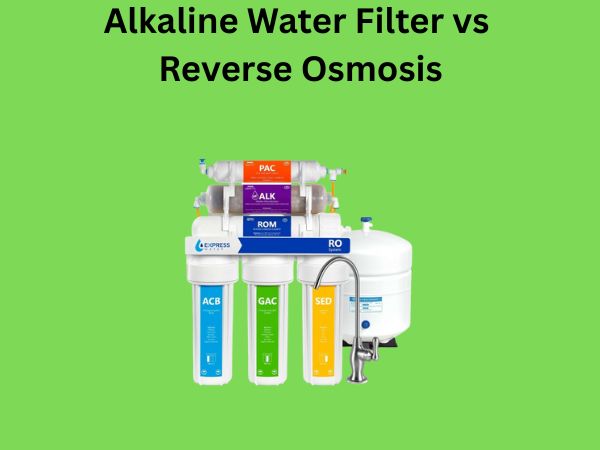
Before water even reaches the reverse osmosis membrane, it passes through pre-filters. Usually, there’s a sediment filter followed by an activated carbon filter, similar to what you’d find in an alkaline system. These pre-filters protect the expensive RO membrane from damage and extend its lifespan.
The Reverse Osmosis Membrane
This is where the magic happens. The RO membrane has pores so incredibly small—we’re talking about 0.0001 microns—that only water molecules can squeeze through. Everything else gets rejected. This includes not just harmful contaminants but also minerals.
Water pressure forces the water through the membrane, and the system produces two streams: purified water that goes to your tap and concentrated wastewater that goes down the drain. This wastewater contains all the stuff that the membrane filtered out.
Post-Filtration
After the RO membrane, many systems include a post-filter, often made of activated carbon. This final stage further improves taste and removes any remaining odors.
Comparing Filtration Effectiveness
Now let’s get to the question everyone really wants answered: which system is more effective at actually cleaning your water?
Contaminant Removal Comparison
Reverse osmosis wins hands down when it comes to removing the widest range of contaminants. We’re talking about removing bacteria, viruses, heavy metals, dissolved salts, fluoride, and much more. A quality RO system can remove up to 99 percent of dissolved solids.
Alkaline filters are good at removing sediment, chlorine, and improving taste, but they’re not designed to remove viruses, bacteria, or many heavy metals. They focus more on improving water quality and pH balance rather than achieving maximum purity.
Specific Contaminant Removal
- Lead: RO removes effectively; alkaline filters offer limited removal
- Chlorine: Both systems remove chlorine well
- Bacteria and Viruses: RO removes; alkaline filters do not
- Fluoride: RO removes; alkaline filters do not
- Dissolved Minerals: RO removes; alkaline filters add minerals
- Taste and Odor: Both systems improve taste significantly
Cost Considerations
Money matters, and the cost of these systems is definitely something to consider when making your decision.
Initial Purchase Price
Alkaline water filters are generally cheaper upfront than reverse osmosis systems. You can find decent pitcher-style alkaline filters for anywhere from $100 to $400. Under-sink alkaline systems typically run between $500 and $1,500.
Reverse osmosis systems are pricier initially. Expect to spend between $150 and $500 for a basic countertop RO system, while under-sink models range from $300 to $1,000. Whole-house RO systems can cost several thousand dollars.
Replacement and Maintenance Costs
This is where the long-term picture becomes important. Alkaline filter cartridges typically need replacement every 6 to 12 months, costing $50 to $200 per replacement.
RO systems require more frequent maintenance. Sediment filters need changing every 6 to 12 months, carbon filters every 12 months, and the RO membrane every 2 to 3 years. Each component replacement costs between $50 and $150. However, if you use your system daily, the cost per gallon of filtered water can actually be quite reasonable.
Health Benefits and Claims
This is where things get interesting—and where you need to be a healthy skeptic.
Claims About Alkaline Water
Alkaline water proponents claim numerous health benefits, including improved digestion, better bone health, increased energy, and even cancer prevention. These claims are attractive and understandable—who wouldn’t want water that could improve their health?
However, the scientific evidence for most of these claims is weak. Your stomach acid is incredibly strong, and it will neutralize alkaline water immediately. The idea that drinking alkaline water will make your blood more alkaline is not supported by solid scientific research.
That said, alkaline water won’t hurt you, and the mineral content it adds might provide some nutritional value if your diet is deficient in minerals like calcium and magnesium.
The Reality of Reverse Osmosis
Reverse osmosis offers the clear benefit of removing contaminants that can genuinely harm your health. Removing heavy metals, bacteria, and viruses is scientifically sound and beneficial. The drawback is that it removes beneficial minerals too, so some people advocate remineralizing RO water before drinking it.
Pure water isn’t necessarily harmful, despite myths you might have heard. Your body gets minerals from food, not primarily from water. However, in areas with very soft water naturally, adding minerals back to RO water isn’t a bad idea.
Installation and Maintenance
How easily can you get these systems set up, and what kind of ongoing work will you need to do?
Alkaline Filter Installation
Pitcher-style alkaline filters are incredibly easy—literally just fill them like a regular pitcher and let them work. Under-sink models require some basic plumbing knowledge or a plumber’s help, but they’re generally simpler than RO systems.
Maintenance involves checking water quality occasionally and replacing cartridges when needed. Most people can do cartridge replacements themselves without professional help.
Reverse Osmosis Installation
RO systems are more involved. If you’re installing an under-sink model, you’ll need to drill a hole in your sink, run tubing to the storage tank, and set up the drain line. This often requires professional installation, which adds to the cost.
Maintenance is more intensive. You need to monitor water pressure, check for leaks, replace filters on schedule, and eventually replace the expensive RO membrane. However, many people find this manageable once they get into the routine.
Water Waste and Environmental Impact
One significant difference between these systems is how much water they waste in the process.
Alkaline Filter Waste
Alkaline filters are quite efficient. Most of the water that passes through the system becomes filtered, drinkable water. There’s minimal waste, making these systems environmentally friendly choices.
Reverse Osmosis Waste
Here’s a concern some people have: RO systems generate wastewater. For every gallon of purified water produced, RO systems typically waste between 3 and 5 gallons of water that goes down the drain. This seems wasteful, and in water-scarce regions, it’s definitely something to consider.
However, this wastewater isn’t contaminated—it’s just water with minerals and contaminants. Some people recycle this water for plants or cleaning. Modern RO systems are becoming more efficient, with some new models achieving better ratios.
Taste and Quality Differences
Let’s talk about something practical: how do these systems actually make your water taste?
Alkaline Water Taste
Many people report that alkaline water tastes smoother and slightly sweet. This is because of the minerals added during the process. If you prefer the taste of mineral water, you’ll likely enjoy alkaline water. The mineral content also gives water a fuller taste that some people prefer over pure water.
Reverse Osmosis Water Taste
RO water is extremely pure, which some people love and others find slightly flat. It’s like the difference between distilled water and spring water. Some RO users add a remineralization cartridge at the end to improve taste, which essentially makes it similar to alkaline water in that regard.
Pure RO water is excellent for making tea and coffee because it won’t leave mineral deposits on your equipment, and it allows flavors to come through more clearly.
Speed of Filtration
If you’re impatient (and who isn’t?), the speed at which your water filters matters.
Alkaline Filter Speed
Alkaline pitcher filters work reasonably quickly, typically producing filtered water within 5 to 15 minutes depending on the model. Under-sink alkaline systems provide water on demand at your tap.
Reverse Osmosis Speed
This is where RO has a potential disadvantage. RO systems are relatively slow. They typically produce between 10 and 25 gallons per day, depending on water pressure and the system model. If you need water immediately, you might have to wait or rely on the storage tank.
However, if you have an RO system with a storage tank, you always have filtered water ready to go. It’s about balancing convenience with the wait time during actual filtration.
Which System Suits Your Needs?
The real answer to which system is “better” depends on your specific situation and priorities.