APEC Whole House Water Filter Reviews: Say Goodbye to Contaminants Permanently
Have you ever stopped to think about what’s actually coming out of your kitchen tap? Most of us don’t, and honestly, that’s probably because we’d rather not know. But here’s the thing—your water quality directly impacts your health, your family’s wellbeing, and even the longevity of your appliances. If you’re tired of wondering what lurks in your water supply, an APEC whole house water filter might just be the solution you’ve been searching for.
Who Is APEC Water Systems and Why Should You Care?
APEC Water Systems isn’t some fly-by-night company that popped up last year. They’ve been in the water filtration business for decades, earning a reputation for reliability and quality. Think of them as the trusted neighbor who actually knows what they’re doing when it comes to water treatment. They focus specifically on whole house filtration systems, which means they’re not spreading themselves thin trying to sell you ten different products. They’re laser-focused on doing one thing well.
What really sets APEC apart is their commitment to using quality materials and proven filtration technologies. They’re not cutting corners or using cheap components that’ll fail after a year. Instead, they’ve invested in research and development to create systems that actually work and last.
Understanding Whole House Water Filtration: Why It Matters
What Exactly Is a Whole House Water Filter?
Picture your home’s water supply as a highway. A whole house water filter is like a checkpoint that inspects every single vehicle (water molecule) before it enters your home. Rather than just filtering the water at your kitchen sink, a whole house system treats water at the point of entry—right where it comes into your home from the municipal supply.
This means every faucet, shower, washing machine, and toilet gets filtered water. It’s comprehensive protection rather than partial solutions. You’re not just improving your drinking water; you’re protecting your entire plumbing system and every appliance that uses water.
Common Contaminants Found in Tap Water
Let me ask you this: have you ever wondered what the EPA considers acceptable in drinking water? It’s actually kind of alarming when you dig into it. Municipal water systems are designed to remove the most dangerous contaminants, but they’re not perfect.
- Chlorine and chlorine byproducts used to disinfect water
- Sediment that causes cloudiness and affects taste
- Heavy metals like lead, copper, and mercury
- Pesticides and herbicides from agricultural runoff
- Pharmaceuticals that have entered the water system
- Bacteria and cysts that might slip through standard treatment
- Fluoride (if you want to reduce your intake)
- Volatile organic compounds from industrial sources
The reality is that tap water quality varies dramatically depending on where you live. Your neighbor might have pristine water while you’re dealing with something that tastes and smells off. An APEC whole house filter addresses these concerns comprehensively.
Key Features That Make APEC Filters Stand Out
Multi-Stage Filtration Technology
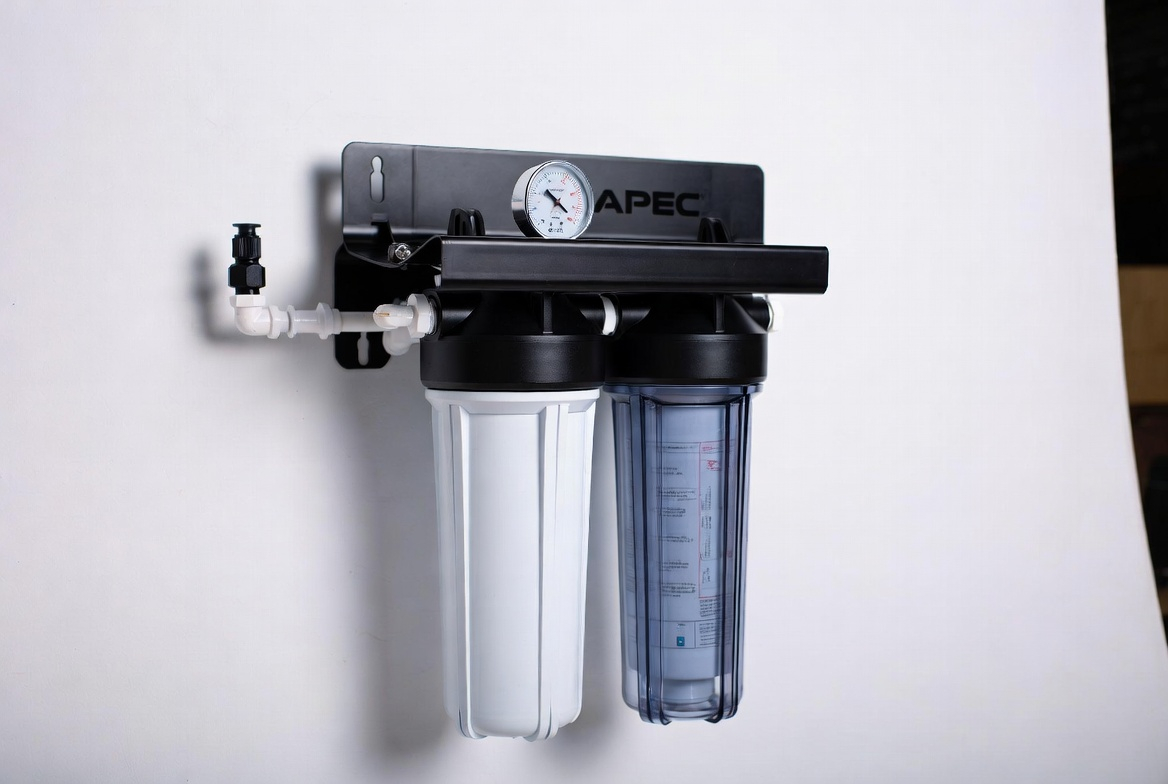
APEC systems typically employ a multi-stage approach, and there’s a good reason for this. Different contaminants require different removal methods. It’s like having a specialized team where each member handles what they’re best at.
Most APEC systems include sediment filters to remove particles, activated carbon for chlorine and odors, and ion exchange resin for hard water minerals. Some models even include additional stages like KDF-55 media or specialty cartridges. This layered approach ensures that nothing harmful makes it through to your taps.
Build Quality and Materials
When you hold an APEC filter housing, you immediately notice it feels solid. We’re talking about heavy-duty plastic and metal components designed to withstand years of use. They’re not using cheap materials that degrade under water pressure and temperature fluctuations.
The filter housings are NSF certified, which means they’ve been tested and verified to meet strict safety standards. You’re getting a product that’s been validated by an independent third party—not just the manufacturer’s claims.
Warranty Coverage
APEC backs their products with solid warranties. Most models come with a one-year warranty on the entire system and individual component warranties. This demonstrates confidence in their product and gives you peace of mind knowing you’re protected if something fails prematurely.
Installation and Setup: Is It Really DIY-Friendly?
The Installation Process Explained
Here’s where APEC really shines for everyday homeowners. You don’t need to be a plumber to install these systems. I know that sounds like a marketing pitch, but it’s genuinely true. Most APEC whole house filters come with detailed instructions and all the necessary components to get started.
The installation location is crucial—you’ll want to find the main water line where it enters your home, usually near the water meter. Shut off the main water supply, locate the correct spot, and install the filter housing. The process typically takes between one to three hours, depending on your comfort level with tools and your specific plumbing setup.
When to Call a Professional
That said, if your home has unusual plumbing configurations, or if you’re not confident working with water lines, hiring a professional plumber is money well spent. Most plumbers can install an APEC system in an hour or two, and you’ll have the peace of mind knowing it’s done correctly.
Tools You’ll Need
- Adjustable wrench (usually included)
- Teflon tape for sealing connections
- Bucket or towels for drips
- Screwdriver (possibly)
- Pipe wrench (optional, depending on your setup)
Filtration Performance: Does It Actually Work?
What the Testing Data Shows
APEC provides test reports showing what their systems can remove, and the numbers are impressive. We’re talking about removal rates exceeding 95% for many common contaminants. Chlorine, sediment, and odor are virtually eliminated. Even heavy metals see significant reduction.
But here’s the important distinction—no filter removes 100% of everything. That’s not realistic. However, APEC filters remove enough to make a noticeable and meaningful difference in water quality. Your water will taste better, smell better, and contain fewer harmful substances.
Real-World Performance Versus Lab Testing
Laboratory results are great, but how does this translate to your actual home? The honest answer is that real-world performance depends on your starting water quality. If you have heavily contaminated water with unusual contaminants, an APEC system might need to be supplemented with additional treatment.
However, for typical municipal water with standard contaminants, APEC systems perform excellently. People report noticing differences immediately—better taste, clearer water, elimination of chlorine smell, and softer skin after showering.
Water Flow Rate and Pressure: Will You Still Have Strong Showers?
One concern homeowners have is whether installing a filter will reduce water pressure. Nobody wants to stand under a wimpy shower that feels like a sprinkle instead of a stream. The good news is that APEC systems maintain excellent water flow rates.
Most APEC whole house filters can handle flow rates of 15 gallons per minute or more, which is perfectly adequate for typical household use. Even with a filter in place, you won’t notice any significant pressure reduction. Your shower will still feel normal, and your washing machine will fill at its regular speed.
As the filter gets older and accumulates sediment, you might notice a slight decrease in pressure. That’s actually a signal that your filter is doing its job and needs replacement soon. It’s like a visual indicator telling you it’s time for maintenance.
Filter Replacement and Maintenance: Keeping Your System Running
How Often Do Filters Need Replacing?
This is where ongoing costs come into play. Most APEC sediment filters need replacement every six to twelve months, depending on your water quality and household usage. If you have particularly dirty water, you might replace them more frequently. If your water is relatively clean, you might stretch it longer.
The activated carbon filters typically last one to two years. Some specialized filters might have different lifespans. APEC makes it clear in their documentation what you should expect for your specific model.
Maintenance Procedures
One of the best things about APEC systems is that maintenance is genuinely simple. When it’s time to replace a filter, you simply unscrew the housing, remove the old cartridge, rinse the housing, insert a new filter, and screw it back together. It’s about as complicated as changing a lightbulb.
There’s no need to hire a professional or buy special equipment. Everything is designed for the homeowner to handle independently. This keeps your long-term costs reasonable.
Replacement Filter Costs
- Sediment filters: typically $15-30 each
- Activated carbon filters: typically $20-40 each
- Specialty filters: $30-60 depending on type
- Annual filter replacement cost: usually $50-150
Cost Effectiveness Over Time: Is This a Smart Investment?
Initial Purchase Price
APEC whole house systems typically range from $500 to $1,500 depending on the specific model and features. This might seem like a significant upfront cost, but let’s put it in perspective.
If you were buying bottled water for your household instead, you’d spend $100-300 per month easily, especially for a family of four. That’s $1,200 to $3,600 annually. Even accounting for filter replacements, an APEC system pays for itself in just four to twelve months compared to bottled water.
Long-Term Savings Calculation
Let’s do the math over a five-year period. An initial investment of $1,000 plus $100 annually in replacement filters means you’re spending $1,400 total over five years. Compare that to roughly $6,000-18,000 on bottled water, and you’re looking at savings of $4,600-16,600 depending on your consumption.
Beyond financial savings, you also save the environmental impact and physical effort of hauling heavy water bottles. It’s a win-win situation.
Customer Satisfaction Ratings: What Are Real Users Saying?
When you look at reviews across multiple platforms, APEC systems consistently receive 4.0 to 4.8 star ratings out of 5.0. That’s not a coincidence—it reflects genuine customer satisfaction.
Common praise includes:
- Noticeable improvement in water taste and clarity
- Easy installation for non-plumbers
- Reliable performance over years of use
- Simple filter replacement process
- Good customer support when questions arise
- Improved appliance longevity due to filtered water
The few negative reviews typically mention issues like initial setup confusion or higher-than-expected water usage for flushing during installation. These are minor concerns that don’t reflect on the product quality itself.
Comparing APEC to Competitors: How Does It Stack Up?
APEC Versus Other Popular Brands
When you compare APEC to other whole house filter manufacturers, you’ll notice they’re competitively priced while offering superior build quality. Some competitors charge more for less sophisticated filtration systems, while others offer cheaper options that compromise on durability.
APEC occupies a sweet spot in the market—they’re not the cheapest option, but they’re not the most expensive either. More importantly, they consistently deliver better performance per dollar than most alternatives.
Why APEC Specifically Excels
What really differentiates APEC is their focus. They’ve committed to whole house filtration as their core business. This specialization means they understand the nuances better than companies trying to do everything. They invest more in research specific to point-of-entry filtration.
Additionally, their customer service is responsive and knowledgeable. When you contact them with questions, you’re talking to people who actually understand water filtration, not just customer service representatives reading scripts.
Common Issues and Solutions
Reduced Water Pressure
If you experience a gradual decrease in water pressure, your filter cartridges likely need replacement. This is normal and expected. Simply replace the filters, and your pressure should return to normal. If pressure drops immediately after installation, check that all connections are tight and nothing is kinked or blocked.
Water Still Tastes Off
If water quality hasn’t improved as expected, several factors could be at play. Your filter might need replacement even if it hasn’t been the full recommended interval. Water hardness might require a different filtration approach. Or your municipal water might contain unusual contaminants requiring specialized treatment.
Contact APEC’s support team—they can often help diagnose the issue and recommend adjustments or supplementary filtration.
Leaking Connections
Small leaks at connection points sometimes occur, especially during initial setup. This is usually caused by insufficient Teflon tape or over-tightening. Gently loosen the connection, add more Teflon tape, and retighten. Most leaks resolve with this simple fix.
Health Benefits You’ll Experience
Reduced Chemical Exposure
Chlorine and its byproducts aren’t ideal for long-term consumption. By removing these chemicals, you’re reducing your exposure to compounds that some research suggests might increase certain health risks. While municipal chlorination is necessary for safety, having the option to remove it in your home is a health benefit.
Lower Heavy Metal Intake
Lead contamination is a real concern in many areas, particularly in homes with older plumbing. Copper and other heavy metals can accumulate in the body over time. An APEC filter significantly reduces these metals, protecting your family’s long-term health.
Improved Hydration
When water tastes better because it’s cleaner, people drink more of