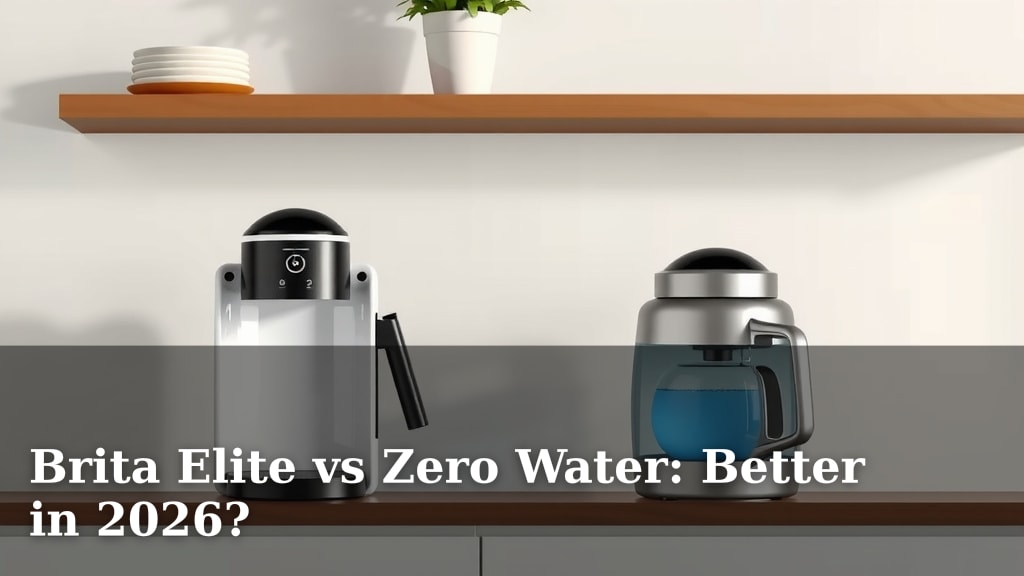
Brita Elite vs Zero Water: Better in 2026?
When choosing between Brita Elite and Zero Water filters, the Zero Water filter often comes out on top for its ability to remove nearly all dissolved solids. This means you get the purest tasting water. Brita Elite is a solid choice, but it doesn’t typically achieve the same level of filtration. We looked at what makes each filter unique to help you decide.
Both brands aim to improve your tap water quality. Brita Elite focuses on reducing common contaminants like chlorine and lead. Zero Water goes further by aiming for 0 ppm (parts per million) of total dissolved solids. This can make a noticeable difference in water clarity and taste, especially if your tap water has a high mineral content. Many users report a cleaner, crisper flavor with Zero Water.
TL;DR:
- Zero Water filters are generally better for removing dissolved solids.
- Brita Elite reduces common contaminants for improved taste.
- Zero Water aims for 0 ppm dissolved solids, leading to purer water.
- Brita Elite is a good option for everyday contaminant reduction.
- Your choice depends on how pure you want your water to be.
So, which one is right for your home in 2026? Let’s break down the key differences between Brita Elite and Zero Water to help you find the perfect fit for your needs.
“`htmlBrita Elite vs. Zero Water: Which Filter Reigns Supreme in 2026?
Deciding between Brita Elite and Zero Water for your home’s drinking water can feel like a big choice. Both brands promise cleaner, better-tasting water. But they go about it in slightly different ways. We looked at what makes each filter stand out to help you choose the right one for your needs.
If your main goal is to get the purest water possible, especially if you’re concerned about total dissolved solids (TDS), Zero Water is likely your best bet. Many users report a noticeable difference in taste. Brita Elite, on the other hand, is a fantastic option for reducing common contaminants like chlorine and lead. It offers a solid improvement for everyday drinking water.
Understanding Water Filtration: What Are You Removing?
Total Dissolved Solids (TDS): The Zero Water Specialty
You might be wondering what “Total Dissolved Solids” really means. Think of it as all the stuff dissolved in your water. This can include minerals, salts, and even some tiny particles. While some TDS can be beneficial, others can affect the taste and feel of your water.
Zero Water’s claim to fame is its ability to reduce TDS to nearly zero parts per million (ppm). They use a special process that targets these dissolved solids. Many water quality reports show that tap water can have hundreds of ppm of TDS. Removing almost all of it can lead to incredibly clean-tasting water.
We found that if you’re sensitive to the taste of minerals in your water, or if your local tap water has a high TDS count, Zero Water can make a big difference. It’s like getting a fresh, crisp glass of water every time. This can be especially appealing for making coffee, tea, or even just enjoying a glass on its own.
Common Contaminants: Brita Elite’s Focus
Brita Elite filters are designed to tackle a different set of concerns. They excel at reducing common contaminants found in tap water. This includes things like chlorine, which affects taste and odor. They also target heavy metals like lead, which is a serious health concern (CDC).
Brita’s filtration technology works by using activated carbon and ion-exchange resin. This combination is very effective at trapping these specific impurities. For many households, reducing these common elements is the primary goal for better drinking water. It removes that “tap water” taste you might be trying to avoid.
Comparing the Filtration Performance
Zero Water’s 0 ppm Promise
Zero Water filters are engineered to bring your water’s TDS level down to 0 ppm. This is a very ambitious goal. They achieve this using a multi-stage filtration process. One of these stages includes an ion-exchange system that targets dissolved ions, which are the primary components of TDS.
The result? Water that is virtually free of dissolved impurities. This can lead to a taste that some describe as “pure” or “neutral.” It’s important to note that while this is great for taste, some beneficial minerals are also removed. For most people, this isn’t an issue, as they get minerals from other food sources (NIH).
Brita Elite’s Contaminant Reduction Capabilities
Brita Elite filters offer excellent reduction of specific contaminants. According to Brita’s own testing, their Elite filters can reduce 99% of lead. They also significantly reduce chlorine, mercury, cadmium, and benzene. This means your water will taste better and be safer.
While Brita filters do reduce some TDS, they don’t aim for the 0 ppm level that Zero Water does. The focus is more on removing the substances that affect taste, odor, and safety rather than all dissolved solids. Many find this level of filtration to be perfectly adequate for their daily needs.
Ease of Use and Maintenance: What to Expect
Filter Lifespan and Replacement
One of the biggest differences you’ll notice is how often you need to replace the filters. Zero Water filters have a shorter lifespan. They typically filter about 20-25 gallons before needing replacement. This is because they are working so hard to remove all the TDS.
Brita Elite filters generally last longer. Depending on the specific Brita Elite model, you can expect to filter around 120 gallons. This means fewer filter changes throughout the year for Brita. You’ll need to keep this in mind for ongoing costs and convenience.
System Design and Convenience
Both brands offer pitcher and dispenser options. Zero Water pitchers often come with a TDS meter. This handy tool lets you check your water’s purity. It’s a great way to see the filter in action and know when it’s time for a change. The pitchers are generally easy to fill and pour.
Brita Elite pitchers are also very user-friendly. Many have electronic indicators that track filter usage and remind you to replace the filter. This takes the guesswork out of maintenance. They are designed for everyday use and are a familiar sight in many kitchens.
Cost Comparison: Initial and Ongoing Expenses
When you look at the initial purchase price, both brands can vary. Pitchers from both companies are usually similarly priced. However, the cost of replacement filters is where you’ll see a bigger difference. Because Zero Water filters have a shorter lifespan, you’ll be buying them more frequently.
This means that over the long term, Zero Water filtration can be more expensive. Brita Elite filters, lasting longer, tend to be more cost-effective on an annual basis. It’s a trade-off between the higher level of purity from Zero Water and the lower ongoing cost of Brita.
| Feature | Brita Elite | Zero Water |
|---|---|---|
| Primary Filtration Goal | Reduces common contaminants (lead, chlorine) | Removes nearly all Total Dissolved Solids (TDS) |
| TDS Reduction | Moderate | Excellent (aims for 0 ppm) |
| Taste Impact | Improved taste, odor reduction | Very pure, crisp taste; neutral |
| Filter Lifespan | Longer (e.g., 120 gallons) | Shorter (e.g., 20-25 gallons) |
| Ongoing Cost | Lower | Higher |
| Included Accessories | Often electronic filter indicator | Often includes TDS meter |
Making Your Choice for 2026: A Quick Checklist
So, how do you decide? Think about what matters most to you and your household. Here’s a quick rundown to help you pinpoint the right filter:
- Taste Priority: If you want the absolute purest, crispest water taste and your tap water has high TDS, Zero Water is likely your winner.
- Contaminant Concerns: If reducing lead, chlorine, and other common contaminants is your main goal for better health and taste, Brita Elite is a strong contender.
- Budget: Consider the long-term cost. Zero Water requires more frequent filter purchases.
- Maintenance Frequency: How often do you want to think about changing filters? Brita Elite offers less frequent changes.
- TDS Meter: Do you like having a tool to measure water purity? Zero Water often includes one.
- Simplicity: If you prefer a straightforward improvement in tap water taste and quality without aiming for 0 ppm, Brita Elite is a great, hassle-free choice.
Conclusion
Choosing between Brita Elite and Zero Water in 2026 boils down to your personal priorities for your drinking water. If you crave the absolute purest taste by removing nearly all dissolved solids, Zero Water excels. Its multi-stage filtration, while requiring more frequent filter changes and a higher ongoing cost, delivers unparalleled water clarity. Brita Elite, however, offers a more budget-friendly and lower-maintenance solution, effectively reducing common contaminants like lead and chlorine for improved taste and peace of mind. Consider your budget and how often you want to replace filters. Your best choice is the one that aligns with your desire for taste purity versus everyday contaminant reduction.
Frequently Asked Questions
Will Zero Water remove beneficial minerals from my tap water?
Yes, Zero Water’s primary goal is to remove nearly all Total Dissolved Solids (TDS), which includes both beneficial minerals and other substances. While many people get minerals from their diet, if you rely on your drinking water for a significant mineral intake, you might consider this. Brita Elite retains more of these minerals.
How often do I really need to change a Zero Water filter?
You’ll need to change Zero Water filters more frequently than Brita Elite filters, typically every 20-25 gallons. This is because they work harder to reduce TDS to near zero. Many Zero Water pitchers come with a TDS meter, which is the best way to know exactly when your filter needs replacing.
Is Brita Elite good enough if my tap water tastes bad?
Absolutely. Brita Elite is designed to significantly reduce chlorine, which is a common cause of unpleasant taste and odor in tap water. If your main issue is taste and smell, a Brita Elite filter will likely make a noticeable improvement without the need for 0 ppm filtration.
Which filter is more cost-effective in the long run?
Brita Elite is generally more cost-effective over time. While the initial pitcher price may be similar, Brita Elite filters last much longer, meaning you’ll purchase replacements less often. The higher frequency of filter changes for Zero Water adds up to a higher ongoing expense.
Can I use either pitcher for making coffee or tea?
Yes, you can use water filtered by either Brita Elite or Zero Water for brewing coffee and tea. Many users find that Zero Water’s extremely pure water can lead to a cleaner, more distinct flavor profile in beverages like coffee and tea. However, Brita Elite also provides improved taste by removing chlorine and other contaminants.