Epic Water Filter vs LifeStraw: Compared
When choosing between the Epic Water Filter and LifeStraw for your hydration needs, it’s not about a single “winner.” Instead, the best choice depends on your specific use case and priorities. LifeStraw excels as a personal, portable filter for emergencies and backpacking. Epic Water Filter offers a broader range, including pitcher filters and larger systems, often focusing on long-term water purification for your home.
Both brands aim to provide safe drinking water from questionable sources. They use advanced filtration technologies to remove harmful contaminants. However, their design philosophies and intended applications differ significantly, impacting factors like filter lifespan, flow rate, and overall cost-effectiveness for different scenarios. We found that understanding these differences is key to making the right decision for your personal needs.
- LifeStraw is best for individual, immediate use in outdoor adventures or emergencies.
- Epic Water Filter often provides solutions for household water purification with longer-lasting filters.
- Consider your primary need: personal portability versus home filtration.
- Filter lifespan and replacement costs vary greatly between the two.
- Both offer reliable water purification but target different user groups.
Let’s dive into a direct comparison to help you figure out which filter aligns best with your drinking water goals.
Epic Water Filter vs. LifeStraw: Which is Your Best Hydration Match?
Deciding between Epic Water Filter and LifeStraw feels like choosing between a trusty survival knife and a sophisticated multi-tool. Both are designed to give you safe drinking water, but they do it in different ways and for different situations. We’ve researched both to help you see which one fits your life better, whether you’re hiking a mountain or just want cleaner tap water.
Understanding the Core Technologies
At their heart, both brands tackle contaminants. They use advanced filtration methods to remove things you don’t want in your water. This includes bacteria, protozoa, and sometimes even viruses and chemicals. The key difference often lies in the scale and purpose of their filtration.
LifeStraw: The Personal Guardian
LifeStraw is famous for its personal straw-style filters. Think of it as your personal bodyguard for water on the go. You stick it directly into a water source, and it filters as you drink. This makes it incredibly practical for hikers, campers, and emergency kits.
- Target Use: Individual, portable water purification.
- Mechanism: Hollow fiber membrane technology.
- What it Removes: Primarily bacteria and protozoa. Some models also remove viruses and microplastics.
- Lifespan: Typically designed for a set amount of water, like 1,000 liters.
How LifeStraw Works in the Field
Imagine you’re out on a trail, and your water bottle is empty. You find a stream, but it looks a bit murky. With a LifeStraw, you can directly drink from that stream. The filter inside traps the tiny organisms. It’s like having a built-in sieve for dangerous microbes.
We found that this direct-use approach is a big win for immediate hydration needs. There’s no waiting, no collecting water in a separate container. It’s efficient when you’re thirsty and miles from a reliable tap.
Epic Water Filter: Household and Beyond
Epic Water Filter offers a wider range of products. They have personal bottles, but they are also well-known for their pitcher filters and larger whole-house systems. Their focus often leans towards providing cleaner drinking water for your home or for extended trips where you’ll be filtering more water over time.
- Target Use: Household water purification, reusable bottles, larger systems.
- Mechanism: Multi-stage filtration, often including activated carbon and other specialized media.
- What it Removes: Varies by product, but generally includes bacteria, viruses, lead, chlorine, and other chemicals.
- Lifespan: Can range from months to years, depending on the specific filter and usage.
Epic’s Approach to Cleaner Water
With an Epic Water Filter pitcher, you pour water in the top, and it drips through the filter into the pitcher. This allows for pre-filtering larger volumes. Their reusable bottles work similarly, filtering water as you drink, but often with a focus on removing a broader spectrum of contaminants found in tap water, like chlorine and heavy metals.
We found that Epic’s system is often about convenience and taste for daily use. You can have a pitcher ready in your fridge, providing great-tasting water whenever you want it. This approach suits families or individuals who want to improve their everyday water quality.
Key Comparison Points: What Matters Most to You?
When you’re comparing these two, think about your main goal. Are you planning an expedition where every ounce counts? Or are you looking to reduce plastic bottle waste at home?
Portability vs. Volume Filtration
LifeStraw shines in portability. It’s lightweight and designed to be carried in a backpack or pocket. Epic’s pitcher filters are great for home use, but not something you’d pack for a backpacking trip. Their bottles offer a blend of portability and filtration.
Filter Lifespan and Cost Over Time
This is a big one for your wallet. LifeStraw filters are rated for a specific volume, say 1,000 liters. Once that’s reached, you replace the whole filter unit. Epic filters, especially for pitchers, often last for months or even a year, and you typically replace just the filter cartridge, not the entire housing.
We researched that the long-term cost can be lower with Epic filters if you’re filtering a lot of water regularly at home. However, for occasional emergency use, LifeStraw’s upfront cost might be more appealing.
What Contaminants Are You Concerned About?
LifeStraw’s primary focus has historically been on microbiological threats – bacteria and protozoa – which are critical in survival situations. Many models now also tackle viruses and microplastics. Epic filters often aim for a broader removal range, including chemicals like chlorine and heavy metals like lead, which are common concerns in municipal water supplies. Always check the specific product’s specifications to ensure it meets your needs.
Ease of Use and Flow Rate
LifeStraw filters can sometimes have a slower flow rate, especially as they get used. It takes a bit of suction to draw water through. Epic pitcher filters typically have a decent flow rate once the water passes through. Their bottle filters also aim for a good balance.
Here’s a quick rundown of what we found:
- LifeStraw: Best for direct, on-the-go drinking from natural sources. Simple, effective, and highly portable.
- Epic Water Filter: Excellent for improving daily tap water quality, reducing waste, and for larger volumes of filtered water at home.
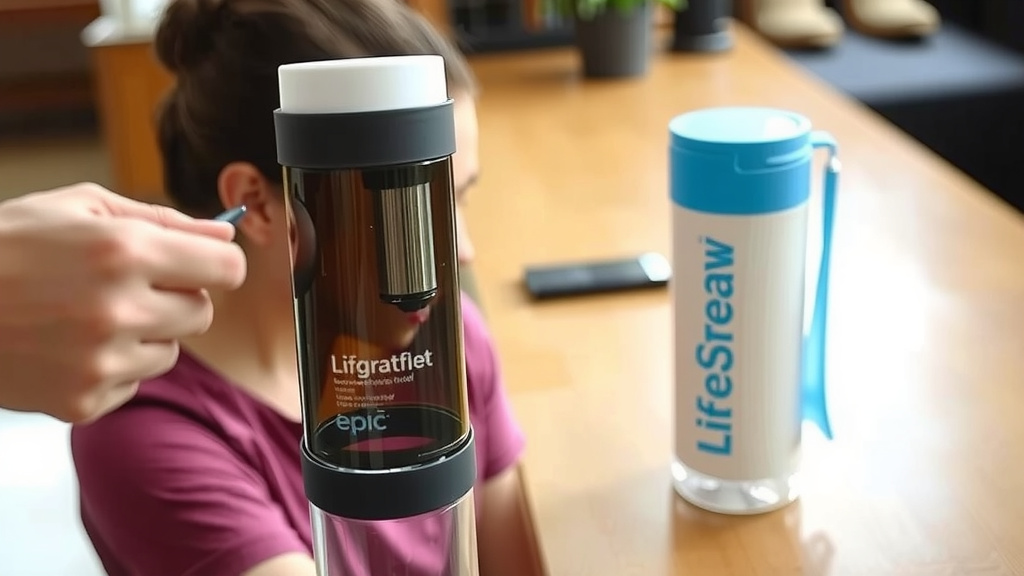
A Quick Comparison Table
| Feature | LifeStraw | Epic Water Filter |
|---|---|---|
| Primary Use | Personal, portable filtration for outdoors/emergencies | Household filtration, daily drinking water, travel bottles |
| Filtration Method | Hollow fiber membrane | Multi-stage (carbon, specialized media, etc.) |
| Removes (Common) | Bacteria, protozoa (some models: viruses, microplastics) | Chlorine, lead, bacteria, viruses, chemicals (varies by product) |
| Filter Lifespan | Rated liters (e.g., 1,000L) | Months to years (e.g., 150L for bottles, 40 gallons for pitchers) |
| Portability | Extremely high | Bottles: high. Pitchers: low. |
| Taste Improvement | Limited | Significant (removes chlorine) |
Making Your Final Choice: A Checklist
To help you decide, ask yourself these questions:
- Do you need a filter for survival situations or emergency preparedness?
- Is your main goal to improve the taste and quality of your tap water at home?
- Will you be using this filter primarily outdoors and on the move?
- Are you looking for a solution to reduce plastic bottle waste?
- How much water do you anticipate filtering on a daily basis?
- What types of contaminants are you most concerned about removing (e.g., just microbes, or also chemicals and heavy metals)?
By considering these points, you can better determine which brand’s philosophy and product line will best serve your personal hydration needs.
Conclusion
When you’re choosing between Epic Water Filter and LifeStraw, remember there’s no single best answer for everyone. LifeStraw is your ideal companion for immediate, personal hydration needs in outdoor or emergency settings. Epic Water Filter shines when you need to improve your daily tap water quality at home or reduce plastic waste with reusable solutions. We’ve seen that your decision should hinge on your primary use case: quick, portable filtration or consistent, high-volume purification. Consider what contaminants you’re most worried about and your budget for long-term filter replacements. Make the choice that best fits your lifestyle, and you’ll always have safe water at your fingertips.
Frequently Asked Questions
Can I use LifeStraw to filter tap water at home?
While LifeStraw can filter tap water, it’s not its intended primary use for daily home consumption. Its design is optimized for removing microbiological contaminants from natural sources. For everyday tap water, an Epic Water Filter pitcher or bottle might offer better taste improvement and cost-effectiveness over time due to its broader filtration capabilities.
Which filter is better for removing chemicals from water?
Epic Water Filters often excel at removing a wider range of chemicals, such as chlorine and lead, thanks to their multi-stage filtration systems that typically include activated carbon. LifeStraw’s core technology primarily focuses on bacteria, protozoa, and sometimes viruses, though newer models are expanding their capabilities.
How do the replacement filter costs compare between the two brands?
Filter replacement costs can vary. LifeStraw filters are typically rated for a specific volume of water (like 1,000 liters) and then the entire unit may need replacement. Epic Water Filter’s pitcher and bottle filters often have different lifespans measured in months or gallons, and you usually just replace the filter cartridge, which can sometimes be more economical for high-volume daily use.
Are Epic Water Filter bottles good for hiking?
Yes, Epic Water Filter bottles can be a good option for hiking, especially if you want to filter water from various sources while also improving the taste. They offer a balance between portability and filtration capacity, making them suitable for day trips or less extreme backpacking scenarios where you might filter water from taps or less pristine natural sources.
Which filter is better for emergency preparedness kits?
For emergency preparedness, LifeStraw is often a top choice due to its extreme portability, simplicity, and effectiveness against the most critical biological threats in survival situations. Its ability to provide immediate, drinkable water directly from a source makes it a reliable tool when you have limited options and need safe hydration fast.