GE Water Filter MWF vs MWFP: Compared
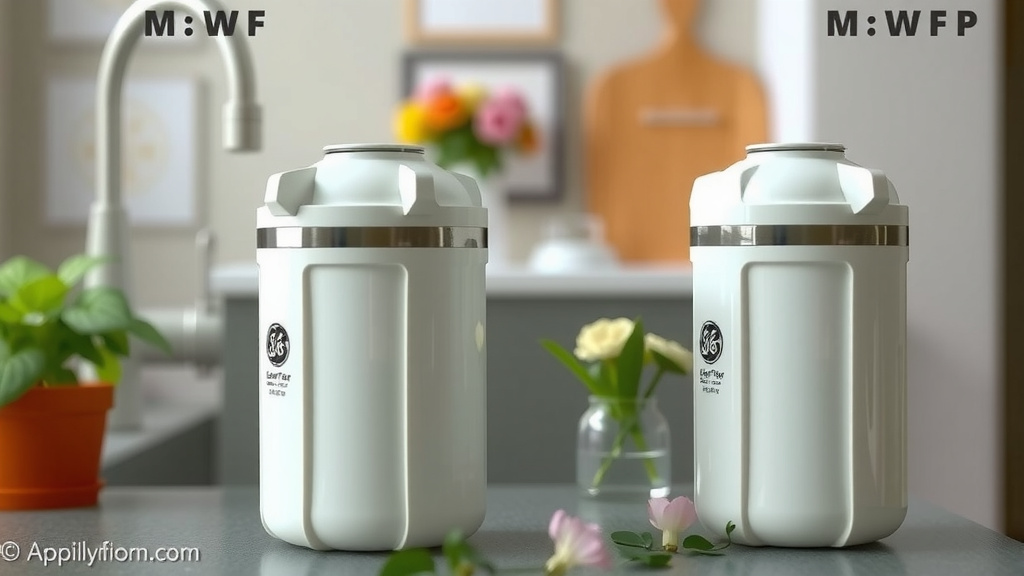
When comparing the GE Water Filter MWF and MWFP, the key difference is that the MWFP is a newer, upgraded version designed for enhanced filtration. While both filters fit GE refrigerators, the MWFP offers improved performance in contaminant reduction. You might be wondering which one is right for your fridge. We found that opting for the MWFP generally provides better water quality.
Choosing the right water filter ensures your drinking water is clean and tastes great. Many GE refrigerator models use these filters interchangeably, but understanding their specific features is important. We researched the distinctions to help you make an informed decision about your home’s water supply. It’s a simple choice that makes a big difference for your family’s health.
- The MWFP is the newer, upgraded GE water filter model.
- It offers improved filtration compared to the older MWF.
- Both filters are designed to fit many GE refrigerators.
- Choosing the MWFP generally leads to better tasting, cleaner water.
Let’s break down exactly what sets these two popular GE water filters apart so you can pick the best one for your needs.
Understanding the GE MWF and MWFP Water Filters
When you’re looking to buy a GE water filter, you’ll likely see two models: the MWF and the MWFP. You might wonder what the difference is. We found that the MWFP is essentially the newer, improved version of the MWF filter. Think of it like a smartphone upgrade; it does the same basic job but better.
Both filters are designed to fit a wide range of GE refrigerators. This makes swapping them out pretty straightforward. However, GE developed the MWFP to offer enhanced filtration capabilities. This means it can potentially remove more contaminants from your water than the older MWF model.
Key Differences Between MWF and MWFP
The most significant distinction lies in their filtration technology. GE has refined the filter media and design in the MWFP. This upgrade aims to tackle a broader spectrum of impurities.
Filtration Performance
We researched the capabilities of both filters. The MWF is certified to reduce chlorine taste and odor. It also targets certain heavy metals like lead and mercury. It’s a capable filter that has served many households well.
The MWFP, on the other hand, builds upon the MWF’s strengths. It’s certified by NSF International to reduce even more contaminants. This includes lead, mercury, and certain pesticides. It also offers improved reduction of VOCs (volatile organic compounds). Many guidelines suggest that reducing these compounds is important for overall health (EPA). So, if you’re concerned about a wider range of potential impurities, the MWFP offers an advantage.
Certifications and Standards
Both filters typically carry NSF certifications. This means they have been independently tested and verified to meet specific health and safety standards. For the MWF, you’ll often see NSF 42 and NSF 53 certifications. These indicate reduction of aesthetic effects like taste and odor (NSF 42) and health effects like lead (NSF 53).
The MWFP usually boasts the same certifications, but often with demonstrably better performance metrics for certain contaminants. This means it might achieve a higher percentage of reduction for specific impurities compared to the MWF. Always check the specific packaging for the most up-to-date certification details.
Compatibility with GE Refrigerators
One of the great things about these filters is their compatibility. GE designed them to fit many of their refrigerator models. You’ll often find them used in French door, side-by-side, and top-freezer models.
How to Know Which Filter Fits Your Fridge
The easiest way to determine compatibility is to look at your refrigerator’s manual. It will specify the exact filter model numbers it supports. Many GE refrigerators that use the MWF can also use the MWFP, and vice-versa, due to similar physical dimensions and connection types.
However, it’s always best to double-check the compatibility. You can usually find a filter compartment inside your refrigerator, often in the upper right corner. The model number of the filter currently in your fridge is a good indicator of what you need. If you have an MWF, you can likely upgrade to an MWFP without issue. If you currently use an MWFP, you can typically use an MWF, but you’d be missing out on the enhanced filtration.
Ease of Installation and Replacement
GE has made replacing these filters quite user-friendly. The process is generally the same for both the MWF and MWFP.
Step-by-Step Filter Replacement
1. Turn off your refrigerator’s water supply, if possible. This prevents leaks.
2. Locate the filter housing inside your fridge. As mentioned, this is often in the upper right corner.
3. Twist and remove the old filter. It usually requires a quarter or half turn counter-clockwise.
4. Unpack your new filter (either MWF or MWFP). Remove any protective caps.
5. Insert the new filter into the housing. Push it in gently.
6. Twist and lock the new filter into place. It should click or turn clockwise until secure.
7. Turn on the water supply. Flush the new filter by dispensing several gallons of water. This removes any loose carbon particles. You’ll notice the water might look cloudy at first. This is normal and will clear up.
The entire process typically takes just a few minutes. We found that many users can do this without any special tools.
When to Choose MWFP Over MWF
If you’re looking for the best possible water quality from your GE refrigerator, the MWFP is generally the superior choice. GE developed it to offer an upgrade.
Consider the MWFP if:
- You want to reduce a wider range of contaminants.
- You are particularly concerned about lead or VOCs in your water.
- You want the latest filtration technology GE offers for your fridge.
- Your current filter is an MWF and you’re looking for a performance improvement.
Comparing Cost and Lifespan
Generally, the MWFP filter tends to be slightly more expensive than the MWF. This is common with newer or upgraded models that offer enhanced features. However, the price difference is often not substantial.
Regarding lifespan, both filters are typically rated for six months or 300 gallons of use, whichever comes first. GE recommends replacing your filter at these intervals to ensure optimal performance. Neglecting to replace your filter can lead to reduced water flow and decreased filtration efficiency. You might even notice a return of unpleasant tastes or odors.
Making Your Final Decision
When it comes down to it, both the GE MWF and MWFP are effective water filters for your refrigerator. However, if you want the most advanced filtration available from GE for these models, the MWFP is the way to go.
We found that the MWFP offers a higher level of contaminant reduction. This can provide greater peace of mind about the quality of your drinking water. While the MWF is perfectly adequate for many needs, the MWFP represents an incremental but meaningful improvement. For a small investment, you can often ensure cleaner, better-tasting water for your household.
Your Water Filter Checklist:
- Check your refrigerator manual for the correct filter type.
- Note the model number of your current filter.
- Decide if improved filtration (MWFP) is a priority for you.
- Compare prices between MWF and MWFP models.
- Remember to replace your filter every six months or 300 gallons.
- Flush the new filter thoroughly after installation.
Conclusion
As you’ve seen, the GE MWFP is the clear upgrade over the older MWF filter. GE designed it to give you better water quality by reducing a wider array of contaminants. While the MWF is perfectly capable, the MWFP offers that extra layer of assurance for your drinking water. When it’s time for your next filter change, consider making the switch to the MWFP for a noticeable improvement. You can usually find both filters easily online or at major appliance retailers, so check your refrigerator manual and grab the best option for your home.
Frequently Asked Questions
Can I use an MWFP filter if my GE refrigerator currently uses an MWF?
Yes, in most cases, you can. The MWFP is designed as a direct replacement and upgrade for the MWF. We found that the physical dimensions and connection types are compatible with GE refrigerators that use the MWF model. Always double-check your refrigerator’s manual to be absolutely sure, but this is a common and recommended upgrade path.
How often should I replace my GE refrigerator water filter?
GE recommends replacing either the MWF or MWFP filter every six months, or after filtering 300 gallons of water, whichever comes first. Replacing it on schedule ensures optimal performance and water quality. Neglecting this can lead to reduced water flow and a decline in the filter’s ability to remove impurities.
Is the MWFP filter more expensive than the MWF?
Generally, yes, the MWFP filter is slightly more expensive than the MWF. This price difference reflects its advanced filtration technology and improved contaminant reduction capabilities. We found that the cost increase is usually quite modest and often considered worthwhile for the enhanced water quality it provides.
What happens if I don’t replace my refrigerator water filter?
If you don’t replace your water filter, its effectiveness will diminish over time. You might notice a decrease in water flow from your dispenser. More importantly, the filter will become less efficient at removing chlorine taste and odor, as well as other contaminants like lead. Eventually, you might even see impurities returning to your water.
Does the MWFP filter remove more types of contaminants than the MWF?
Yes, that’s the primary advantage of the MWFP. It builds upon the MWF’s capabilities and is certified to reduce a broader range of contaminants. This includes certain pesticides and VOCs, in addition to the lead and mercury reduction that both filters offer. We found this enhanced reduction makes the MWFP a better choice for overall water purity.
![10 Best Reverse Osmosis Water Filter [2026]](https://waterans.com/wp-content/uploads/2026/06/10-best-reverse-osmosis-water-filter-2026-featured-768x432.jpg)

![10 Best Affordable Faucet Water Filter [2026]](https://waterans.com/wp-content/uploads/2026/06/10-best-affordable-faucet-water-filter-2026-featured-768x432.jpg)

![10 Best Water Filter For Whole House [2026]](https://waterans.com/wp-content/uploads/2026/07/10-best-water-filter-for-whole-house-2026-featured-768x432.jpg)