
Coway vs Amway Water Filter: Which to Pick?
Choosing between a Coway vs Amway water filter depends on your specific needs and budget. Coway generally offers a wider range of models with innovative features, while Amway’s eSpring system is known for its robust, long-term value and established brand trust.
Both brands aim to provide cleaner, healthier water for your home. We found that Coway often excels in user-friendliness and modern design. Amway, on the other hand, is praised for its direct sales model and the perceived durability of its filtration technology. Deciding which is best means looking at filter life, maintenance, and cost.
- Coway: More model variety, often budget-friendly upfront, modern tech.
- Amway eSpring: Long-term cost savings, durable, established brand.
- Consider filter lifespan and replacement cost for both.
- Think about ease of installation and maintenance.
- Your budget will play a big role in the decision.
Let’s break down exactly what makes each of these water filter systems stand out, so you can make the best choice for your home.
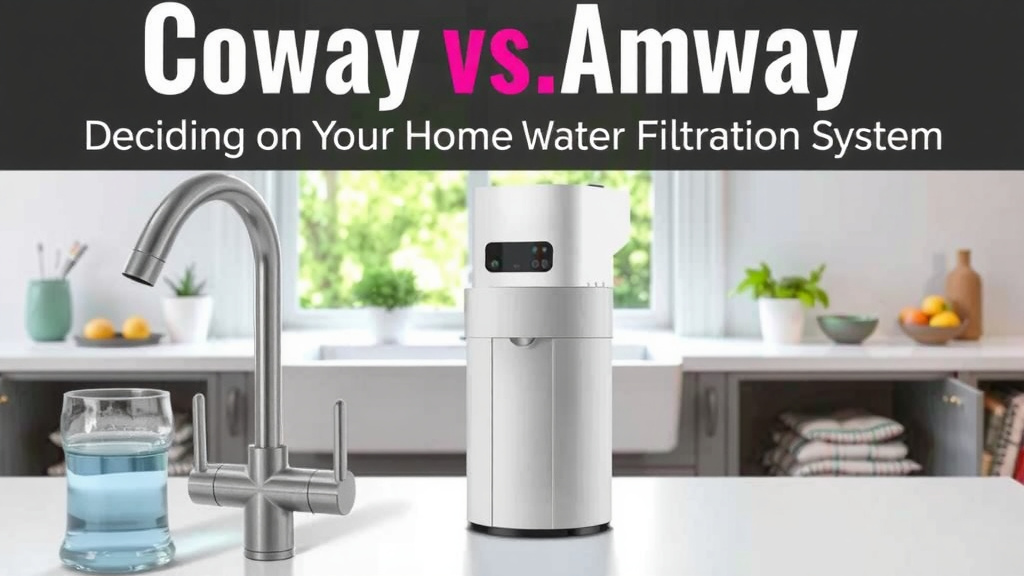
Coway vs. Amway: Deciding on Your Home Water Filtration System
You’re looking to improve your home’s water. That’s a smart move for your health and peace of mind. Coway and Amway are two big names in the water filter market. Both offer systems designed to remove impurities. But they do it in different ways, with different features and price points. Let’s dive into what makes each one unique so you can pick the right fit for your kitchen and your family.
Understanding Water Filtration Technology
At its core, water filtration is about using physical barriers or chemical reactions to remove unwanted stuff from your water. Think of it like a really, really fine sieve for your tap water. Both Coway and Amway systems use advanced technologies to achieve this goal.
Common Filtration Methods
Many filters use activated carbon. This material is great at absorbing chemicals like chlorine and volatile organic compounds (VOCs). Some systems also employ reverse osmosis (RO). RO uses a semi-permeable membrane to remove even smaller contaminants, like dissolved solids and heavy metals. Others might use UV light to kill bacteria and viruses. We found that understanding these basic methods helps you see what each brand offers.
What Contaminants Are You Concerned About?
Before choosing, it’s helpful to know what’s actually in your tap water. You can often find reports from your local water utility. Are you worried about chlorine taste and smell? Or are you more concerned about lead or other unseen contaminants? Knowing your priorities will guide your decision. Some filters are better for specific issues than others.
Coway Water Filters: Innovation and Variety
Coway is known for its wide range of products. They often come with sleek designs and user-friendly features. Many of their systems are designed for easy installation and maintenance. You’ll find options for different budgets, making them accessible to many households. We’ve seen that Coway often packs a lot of technology into its units.
Key Coway System Features
Coway systems frequently utilize multi-stage filtration. This means your water passes through several layers, each tackling different impurities. Some popular models use RO combined with other media for excellent purification. They often feature indicators that tell you when it’s time to change filters. This takes the guesswork out of maintenance.
Smart Features and Design
Many Coway filters are designed with modern kitchens in mind. They are often compact and stylish. Some even offer smart features, like app connectivity, that let you monitor filter status or water consumption remotely. This is a big plus for tech-savvy homeowners who appreciate convenience.
Filter Life and Replacement Costs
Filter replacement is a recurring cost to consider. Coway’s filter life can vary by model, but many are designed to last a good while. For example, a typical main filter cartridge might last around 6 to 12 months. Replacement filters can often be purchased directly from Coway or through various retailers. We found that comparing the cost of replacement filters is essential for long-term budgeting.
Amway eSpring Water Purifier: Long-Term Value
Amway’s eSpring system is a well-established name in home water purification. It operates on a direct sales model, which means you typically purchase through an Amway Business Owner. The eSpring system is designed for durability and offers substantial filtration capabilities. Many users appreciate its robust build and long-term performance.
eSpring’s Filtration Technology
The eSpring system is notable for its combination of carbon block filtration and UV sterilization. The carbon filter effectively reduces common contaminants like chlorine and lead. Then, the UV light destroys bacteria and viruses. This two-pronged approach aims to provide very clean water. Many experts note that UV technology is highly effective against microbiological threats (CDC). It’s a comprehensive approach to water safety.
Performance and Durability
Amway often highlights the longevity of its eSpring system. The carbon filter cartridge is designed to last for a significant amount of time, often around 5,000 liters or one year of use. The UV lamp also has a long lifespan. This focus on durability means fewer replacements over the years, which can translate to savings. We found that the upfront cost is higher, but the long-term value is a key selling point.
Maintenance and Support
Maintenance for the eSpring is straightforward. You’ll need to replace the carbon filter cartridge and the UV lamp periodically. Amway provides clear instructions for this process. Because it’s sold through a network of distributors, you might find personalized support from your local Amway Business Owner. This direct relationship can be appealing for some customers seeking ongoing assistance.
Making Your Choice: Key Comparison Points
When you’re weighing Coway against Amway, think about what matters most to you. Both brands aim to deliver cleaner water, but they approach it with different philosophies and technologies.
Cost Analysis: Upfront vs. Long-Term
Coway often has a lower initial purchase price, especially for their basic models. This can make it easier to get started if you’re on a tighter budget. Amway’s eSpring typically has a higher upfront cost. However, due to its long filter life and durable components, the long-term cost of ownership might be comparable or even lower. Researching the price of replacement filters for both systems is crucial for accurate comparison.
Ease of Use and Installation
Many Coway systems are designed for easy DIY installation. They often come with clear instructions and simple connections. Some Amway eSpring models also offer relatively simple installation, often attaching directly to your faucet. However, the direct sales model might mean you rely on your Business Owner for initial setup advice.
Filtration Capabilities and Specific Needs
Consider the specific contaminants you want to remove. If you need advanced RO filtration, Coway offers several models with this capability. If your main concern is microbiological contamination alongside chemical reduction, Amway’s UV-enhanced carbon filtration is a strong contender. Many experts suggest that for general chemical reduction, activated carbon is highly effective (EPA). For bacteria and viruses, UV is a proven method.
Filter Lifespan and Maintenance Schedule
Here’s a quick look at filter life, which impacts how often you’ll be buying replacements:
| Feature | Coway (Typical) | Amway eSpring (Typical) |
|---|---|---|
| Main Filter Life | 6-12 months | 1 year or 5,000 liters |
| UV Lamp Life (if applicable) | Varies by model | 1 year or 5,000 liters |
| Replacement Ease | Generally easy DIY | Generally easy DIY |
Your Next Steps for Cleaner Water
To make your final decision, consider these points:
- Check your local water quality report: Know what you need to filter.
- Set your budget: Look at both upfront and ongoing costs.
- Think about installation: Do you want a simple DIY or expert help?
- Consider maintenance: How often do you want to change filters?
- Read reviews: See what other users say about reliability.
- Assess design preferences: Does it fit your kitchen aesthetic?
By carefully looking at these factors, you can confidently choose between a Coway and an Amway water filter system. Your perfect match is out there, ready to provide you with cleaner, healthier water.
Conclusion
Choosing between a Coway and an Amway water filter really comes down to your priorities. Coway shines with its variety of models, modern features, and often a lower initial cost. It’s a great choice if you want flexible options and a sleek design. Amway’s eSpring offers a robust, long-term investment with its durable build and effective UV purification. We found that while its upfront price is higher, the extended filter life can offer cost savings over time. Your best bet is to assess your budget, the specific contaminants you’re concerned about, and how much maintenance you’re comfortable with.
Take the next step by checking your local water report and comparing the long-term costs of filter replacements for both brands. This will help you confidently select the system that’s just right for your home and your family’s needs.
Frequently Asked Questions
Which brand is generally more budget-friendly for initial purchase?
Coway systems typically have a lower upfront cost. They offer a wider range of models at various price points, making them accessible for those on a tighter initial budget. Amway’s eSpring generally requires a higher initial investment.
Does Amway’s eSpring offer any advantage over Coway for health concerns?
Amway’s eSpring system includes UV sterilization in addition to carbon filtration. This dual approach is highly effective at neutralizing bacteria and viruses, which might be a key consideration if microbiological contaminants are a primary concern for your water quality.
How do filter replacement costs compare between Coway and Amway?
While Coway filters may need replacing more frequently, their individual cost can be lower. Amway’s eSpring filters last longer, meaning fewer purchases over time. You should compare the total cost of ownership over several years, not just the price of a single filter.
Which system is easier to install if I’m not very handy?
Many Coway countertop and under-sink models are designed for simple DIY installation with clear instructions. While the Amway eSpring is also generally straightforward to connect, its direct sales model might mean you have a dedicated Business Owner available for setup assistance if needed.
Can I get smart features or app connectivity with either brand?
Coway often leads in smart technology. Some of their advanced models offer app connectivity, allowing you to monitor filter status, water usage, and system performance remotely. Amway’s eSpring focuses more on its core filtration technology and durability rather than digital integration.

![10 Best Whole Home Water Filter [2026]](https://waterans.com/wp-content/uploads/2026/07/10-best-whole-home-water-filter-2026-featured-768x432.jpg)