Air Pump vs Water Filter: Understanding Their Different Uses and Functions
When you’re setting up an aquarium, maintaining a pond, or even just trying to understand water and air treatment systems, you’ve probably encountered two terms that sound similar but do completely different things: air pumps and water filters. Many beginners mix these up, thinking they serve the same purpose or can substitute for one another. But here’s the truth—they’re about as similar as a fan and a vacuum cleaner. Both move things around, but their jobs are entirely different.
In this guide, I’m going to walk you through exactly what each device does, why you need them, and how they work together to create a healthy aquatic environment. By the end, you’ll understand not just the differences, but why having both (or knowing which one you actually need) matters for your specific situation.
Outline of What We’ll Cover
- Understanding air pumps and their primary functions
- Exploring water filters and how they clean your water
- Key differences between air pumps and water filters
- Why both are often needed in aquariums
- Choosing the right equipment for your needs
- Common misconceptions about these devices
- Maintenance tips for both systems
- Cost considerations
- Real-world applications beyond aquariums
- Frequently asked questions
What Is an Air Pump and How Does It Work?
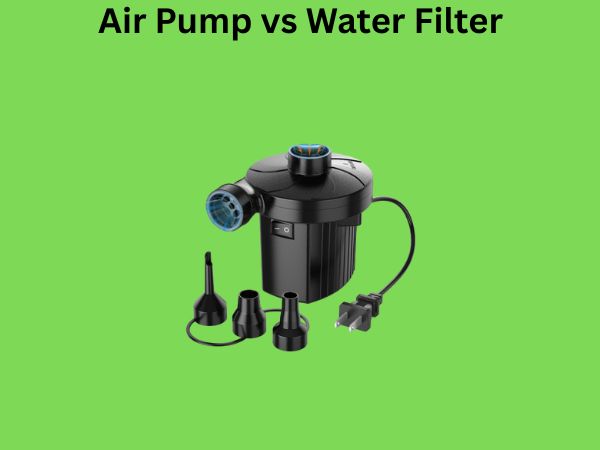
Let me start with air pumps because understanding them first will make the comparison much clearer. An air pump is essentially a device that does one job: it pushes air into water. That’s it. It’s not cleaning anything, and it’s not removing particles. It’s simply aerating your water by introducing oxygen bubbles.
The Basic Function of Air Pumps
Think of an air pump like a bicycle pump, except instead of inflating a tire, it’s releasing tiny bubbles into water. These bubbles serve several critical purposes. First, they add oxygen to the water, which fish and beneficial bacteria desperately need to survive. Without adequate oxygen, your aquarium becomes a dead zone where fish suffocate and bacteria can’t do their job of breaking down waste products.
Beyond just adding oxygen, air pumps create water movement and circulation. Those bubbles rising to the surface disturb the water’s surface tension, allowing carbon dioxide to escape and fresh oxygen to enter. It’s like opening a window in a stuffy room—you’re refreshing the air by creating movement.
Types of Air Pumps Available
You’ll find several varieties of air pumps in the market, each designed for different tank sizes and setups:
- Diaphragm pumps: These use a vibrating diaphragm to push air and are common in small to medium aquariums. They’re relatively quiet but less powerful.
- Piston pumps: These operate more like a real piston and are suitable for larger aquariums. They’re more powerful but tend to be noisier.
- Linear pumps: A middle ground between diaphragm and piston pumps, offering decent power and moderate noise levels.
- Rotary vane pumps: These are typically used in larger setups and commercial applications.
What Air Pumps Cannot Do
Here’s where the confusion starts. Air pumps cannot filter water. They don’t remove fish waste, excess food, dead plant matter, or any other impurities. They’re purely about introducing oxygen and creating circulation. If you rely solely on an air pump, your water will still become murky, toxic, and unsuitable for aquatic life over time.
Understanding Water Filters and Their Purpose
Now let’s talk about water filters, which are the cleanup crew of your aquatic system. While an air pump is about adding oxygen, a water filter is about removing unwanted substances from the water.
The Core Function of Water Filters
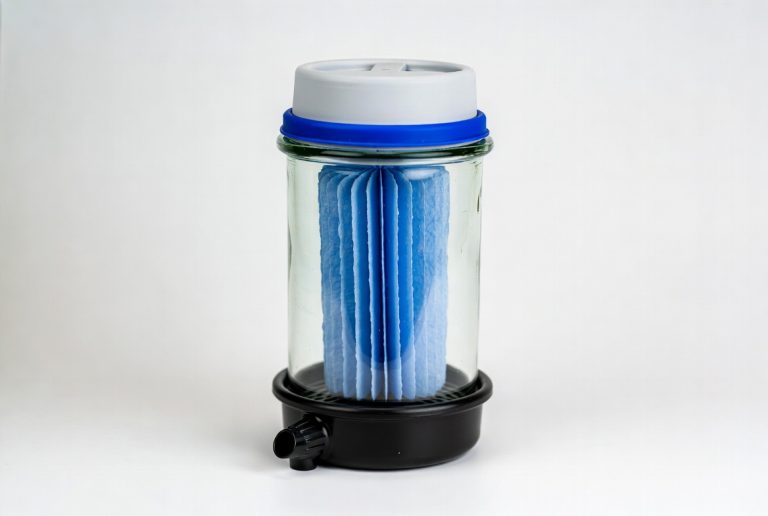
A water filter works by passing water through various media that trap particles and allow beneficial bacteria to grow. Imagine it like a coffee filter—the water passes through, but the grounds get caught and separated. In an aquarium, the “grounds” are fish waste, uneaten food, decaying plants, and other organic matter that would otherwise poison your fish.
Water filters accomplish this through three main mechanisms, often called the three stages of filtration:
- Mechanical filtration: This is the physical trapping of particles. Materials like foam, floss, or mesh catch visible debris.
- Biological filtration: This is where beneficial bacteria colonize the filter media and break down harmful compounds like ammonia and nitrite into less toxic substances.
- Chemical filtration: This optional stage uses materials like activated carbon to remove dissolved substances and odors from the water.
Types of Water Filters in Use
Just like air pumps, water filters come in different styles suited to different needs:
- Hang-on-back filters: These attach to the back of your tank and are popular for small to medium aquariums. They’re easy to maintain and don’t require drilling.
- Canister filters: These are external filters that offer powerful filtration for larger tanks. They can handle high bioloads and are efficient.
- Internal filters: These sit inside the tank and are great for space-conscious setups or smaller aquariums.
- Sponge filters: These are simple, affordable, and excellent for biological filtration, though they offer less mechanical cleaning.
- Undergravel filters: These use the substrate as a filter medium and have become less popular due to maintenance requirements.
- Power filters: Similar to hang-on-back filters but with more powerful motors.
The Importance of Biological Filtration
One aspect of water filters that deserves special mention is biological filtration. This isn’t something you can see happening, but it’s absolutely crucial. Inside your filter, beneficial bacteria like Nitrosomonas and Nitrobacter colonize the media. These invisible workers consume the toxic ammonia produced by fish waste and convert it into nitrite, which is then converted into nitrate—a much less toxic compound that can be removed through water changes.
Without adequate biological filtration, your tank would become toxic within days, even with perfect mechanical filtration. These bacteria are the unsung heroes of aquarium keeping.
Key Differences Between Air Pumps and Water Filters
Now that we’ve explored each device separately, let’s directly compare them to highlight their fundamental differences:
Primary Purpose
The most obvious difference is their main job. An air pump adds oxygen and creates water circulation, while a water filter removes impurities and establishes a nitrogen cycle through beneficial bacteria. One is about enriching the water, the other is about cleaning it.
What They Accomplish
An air pump will keep your fish alive (in terms of oxygen availability) but won’t prevent the water from becoming toxic due to waste accumulation. A water filter will remove waste and establish biological processes but doesn’t add oxygen directly. They address different problems, which is why they’re often used together.
Installation and Setup
Air pumps are extremely simple to install. You plug them in, attach airline tubing, place the airstone or diffuser in the water, and you’re done. Water filters require a bit more setup—you need to install the unit, fill it with appropriate media, prime it properly, and connect intake and output tubes. They’re more involved but also more sophisticated.
Maintenance Requirements
Air pumps require minimal maintenance. Occasionally, you might need to clean the airstone if it becomes clogged with mineral deposits, but that’s about it. Water filters, on the other hand, require regular maintenance. You’ll need to clean or replace the filter media, monitor the water flow rate, and check for clogs. This is necessary work, though, because it keeps the filter functioning properly.
Cost Considerations
Generally, air pumps are less expensive than water filters. You can find decent air pumps for fifteen to fifty dollars, while even basic water filters often start at thirty dollars and can go much higher for quality canister filters. However, filters are investments that protect your entire aquatic ecosystem.
Noise Levels
Air pumps, particularly piston and rotary vane models, can be quite noisy. If you want a quiet aquarium, you might opt for a diaphragm pump or consider placing the pump in a cabinet with sound-dampening materials. Water filters are generally quieter, though power filters with high flow rates can produce some noise as well.
Do You Need Both or Just One?
This is the question that confuses most people, so let me be crystal clear: it depends on your setup, but in most cases, you’ll benefit from having both an air pump and a water filter, especially in traditional aquariums.
Scenarios Where You Need a Water Filter
If you have fish, you almost certainly need a water filter. Fish produce waste continuously, and that waste accumulates. Without filtration, ammonia and nitrite levels spike, and your fish will become stressed, sick, or die. Water filters are non-negotiable for maintaining a healthy aquarium.
The only exception might be in heavily planted tanks with minimal fish, where plants consume some of the nutrients produced by fish waste. But even then, a filter provides insurance and more stability.
When an Air Pump Becomes Valuable
Air pumps become particularly valuable in several scenarios. If you have a betta fish or other labyrinth fish that can gulp air from the surface, you technically don’t need an air pump for oxygen. However, if you have many fish, you have a small tank, or you want to ensure optimal oxygen levels, an air pump helps tremendously.
Air pumps are also essential if your water filter doesn’t create sufficient water movement or surface agitation. Some filters create minimal current, and an air pump compensates by ensuring water circulation and oxygenation throughout the tank.
The Synergy Between Both Systems
When used together, air pumps and water filters create a much healthier aquatic environment. The filter does the heavy lifting of removing waste and establishing beneficial bacteria colonies, while the air pump ensures adequate oxygen and water movement. The filter media in a good filter also needs flow to function properly, and the aeration helps water circulate to different areas of the tank, ensuring no dead zones develop.
Common Misconceptions About These Devices
Let me address some myths I’ve encountered frequently:
Myth One: An Air Pump Cleans Water
This is the biggest misconception. No, an air pump does not clean water. It might make the water look more active because of the bubbles, but it’s not removing any contaminants. People sometimes think the bubbles are “cleaning” the water, but that’s just not how it works.
Myth Two: You Only Need One or the Other
While it’s technically possible to maintain a small tank with just a filter and no air pump (especially if the filter creates good surface agitation), most aquariums benefit from both. And you definitely can’t rely on just an air pump without a filter in a fish tank.
Myth Three: More Bubbles Mean Better Filtration
An air pump creating lots of bubbles doesn’t indicate that filtration is happening. Bubbles add oxygen and movement, but they don’t filter anything. A tank could have tons of bubbles and still have terrible water quality if there’s no actual filter present.
Myth Four: Filters Last Forever
Filters need maintenance and eventually need media replacement. A neglected filter becomes a source of problems rather than solutions. Regularly maintaining your filter is essential to its function.
Choosing the Right Equipment for Your Needs
Assessing Your Tank Size
Your tank size is the primary factor in choosing appropriate equipment. A ten-gallon betta tank has very different needs than a hundred-gallon community tank. Larger tanks need more powerful filters and may need multiple air pumps or a single more powerful one to ensure adequate circulation.
Most filter manufacturers recommend a certain flow rate for their products. As a rule of thumb, your filter should turn over the entire tank volume at least four times per hour. A fifty-gallon tank should have at least two hundred gallons per hour of flow rate from your filter.
Considering Your Fish Load
How many fish you keep and what species they are matters significantly. Messy eaters produce more waste. Large fish produce more waste than small fish. Goldfish are notorious waste producers and need robust filtration. A heavily stocked tank needs stronger filtration than a lightly stocked one.
Space and Aesthetic Considerations
Some people don’t like visible equipment in their tanks. Others don’t have space for large external filters. Consider your space constraints and whether you prefer subtle or visible equipment. Hang-on-back filters are less obtrusive than canister filters. Sponge filters are very small but less powerful.
Budget Constraints
You don’t need the most expensive equipment to maintain a healthy tank, but ultra-cheap filters often perform poorly or fail quickly. Aim for mid-range quality filters and air pumps. It’s better to spend fifty dollars on a decent filter than twenty dollars on one that will clog constantly or break in six months.
Maintenance: Keeping Both Systems Running Smoothly
Air Pump Maintenance
Air pumps require minimal care. Check the airstone occasionally—if bubbles are becoming smaller or fewer, the stone might be clogged with mineral deposits. You can soak it in vinegar to dissolve the buildup or replace it. Make sure the pump is positioned in a well-ventilated area so it doesn’t overheat. If it starts making strange noises, check for blockages in the airline tubing.
Water Filter Maintenance
Filter maintenance is more involved but essential. Depending on your filter type and fish load, you’ll need to clean or replace the mechanical media (foam, floss, etc.) every week or two. Biological media should be rinsed gently in old tank water (never tap water, which will kill the beneficial bacteria) to remove obvious detritus without destroying the bacterial colonies.
Check the filter’s water flow rate regularly. If it’s slowing down, the media probably needs cleaning. Always perform these maintenance tasks gradually—cleaning everything at once can crash your nitrogen cycle by removing too many beneficial bacteria at one time.
Real-World Applications Beyond Aquariums
Hydroponics and Aquaponics
Both air pumps and water filters are crucial in hydroponic and aquaponic systems. In aquaponics especially, the filter is essential for removing fish waste (which becomes nutrients for plants), and the air pump ensures oxygen for both fish and beneficial bacteria in the system.
Pond Management
Outdoor ponds use similar principles. A pond filter removes waste and maintains water quality, while aeration (often achieved through air pumps or fountains) ensures adequate oxygen, especially important during winter months or in warm weather when oxygen levels drop.
Water Treatment and Purification
Industrial water treatment relies heavily on filtration principles. While the scale is different from home aquariums, the fundamental concept remains the same—removing impurities through various filtration methods.