5 vs 10 Micron Water Filter: A Comprehensive Guide to Choosing Your Ideal Water Filtration System
Have you ever stood in front of a water filter display and felt completely overwhelmed by all the technical jargon? You’re definitely not alone. One of the most confusing decisions people face when selecting a water filtration system is understanding the difference between a 5 micron and a 10 micron filter. It’s like choosing between two similar-looking options at a restaurant without understanding what’s actually on your plate.
The truth is, this seemingly small difference in micron rating can significantly impact your water quality, your wallet, and the overall performance of your filtration system. Think of micron ratings as the size of the net in a fishing scenario—the smaller the net, the tinier the particles you can catch. But here’s the catch: a finer net requires more effort to push water through it.
In this comprehensive guide, I’ll walk you through everything you need to know about these two popular filter options, helping you make an informed decision that actually matches your specific water quality needs and lifestyle.
Understanding Micron Measurement Basics
Before we dive into the specific comparison, let’s establish what we’re actually talking about when we mention microns. A micron is an incredibly tiny unit of measurement—one micron equals one-millionth of a meter. To put this into perspective, a human hair is roughly 75 to 100 microns thick. This means we’re dealing with particles that are invisible to the naked eye.
What Exactly Can Microns Filter?
Different micron sizes capture different contaminants from your water. The smaller the micron rating, the more particles your filter can potentially remove. Common water contaminants that fall into these microscopic size ranges include sediment, rust particles, chlorine by-products, and some bacteria. However, it’s important to understand that even the finest mechanical filters won’t remove dissolved substances like minerals or chemical compounds.
The Relationship Between Micron Size and Filtration Capability
There’s an important relationship to understand here: as the micron size decreases, the filtration becomes more effective, but the filter also becomes more restrictive. It’s a trade-off situation that affects multiple aspects of your water filtration experience, from flow rate to filter longevity.
The 5 Micron Filter Explained
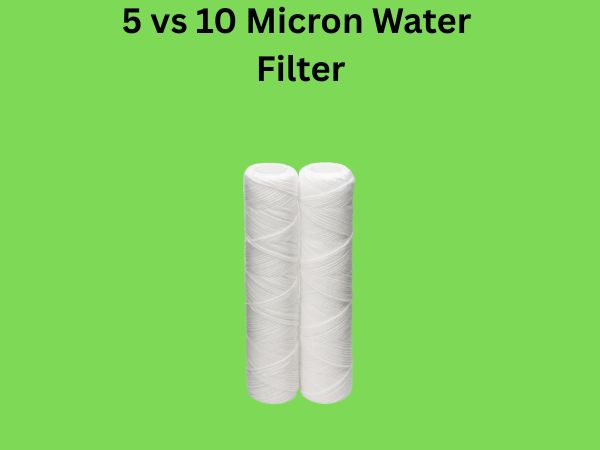
A 5 micron filter is considered a fine or high-efficiency filter in the residential water filtration world. When water passes through a 5 micron filter, it’s catching particles that are five-millionths of a meter in size or larger. This means it’s significantly more effective at removing fine sediment, smaller rust particles, and other microscopic contaminants compared to coarser filters.
What Can a 5 Micron Filter Remove?
- Fine sediment and silt particles
- Small rust and scale particles
- Some bacteria and microorganisms
- Fine dust and debris
- Smaller chlorine residue particles
- Some protozoan cysts
The Advantages of 5 Micron Filters
If you’re dealing with particularly turbid or sediment-laden water, a 5 micron filter is your best friend. It provides superior water clarity and can significantly improve the taste and appearance of your drinking water. Many people with well water or water from sources with known sediment issues swear by 5 micron filters because they genuinely notice the difference in their tap water quality.
Additionally, 5 micron filters are excellent at protecting your downstream equipment. If you have a reverse osmosis system, water softener, or other advanced filtration stages, using a 5 micron pre-filter means those expensive systems won’t get clogged prematurely.
The Drawbacks of 5 Micron Filters
The finer filtration capability comes with some tradeoffs. These filters typically reduce water flow rate more noticeably than coarser alternatives. You might find that your water pressure drops somewhat, which can be annoying if you’re already dealing with low water pressure situations. Additionally, because they’re catching more particles, they tend to clog faster and require more frequent replacement.
The 10 Micron Filter Explained
A 10 micron filter occupies the middle ground in residential filtration—it’s not as coarse as a 20 or 50 micron option, but it’s not as fine as a 5 micron either. These filters are sometimes called standard or medium-efficiency filters in the industry. They’re designed to capture particles down to 10 micrometers in size, which still represents significant filtration capability for many household applications.
What Can a 10 Micron Filter Remove?
- Visible sediment and sand particles
- Larger rust particles and scale
- Some chlorine residue
- Larger suspended particles
- General turbidity and cloudiness
- Some sediment-bound contaminants
The Advantages of 10 Micron Filters
The 10 micron filter strikes a reasonable balance between filtration effectiveness and practicality. First and foremost, water flows through these filters more freely, meaning you’ll experience minimal impact on your water pressure. For households that are already dealing with water pressure challenges, this can be a game-changer that prevents frustration in the shower or at the kitchen sink.
The slower clogging rate is another significant advantage. Because a 10 micron filter isn’t catching every tiny particle, it doesn’t fill up as quickly with sediment. This means you’ll replace filters less frequently, which saves money over time and reduces the hassle of maintenance.
For water that isn’t severely contaminated with sediment, a 10 micron filter often provides perfectly adequate filtration. Many municipal water supplies, even with their occasional quality fluctuations, are cleaned sufficiently by a 10 micron system.
The Drawbacks of 10 Micron Filters
The main limitation of a 10 micron filter is its reduced capability with particularly sediment-heavy or turbid water sources. If your water already looks cloudy or has visible particles, a 10 micron filter might not give you the clarity you’re hoping for. Additionally, some of the finer contaminants that a 5 micron filter would catch will pass right through, which might be relevant depending on your water quality concerns.
Key Differences Between 5 and 10 Micron Filters
Now let’s get specific about how these two options actually compare in practical terms. Understanding the concrete differences will help you evaluate which aligns better with your needs.
Filtration Precision
The most obvious difference is the filtration precision. A 5 micron filter removes particles twice as small as what passes through a 10 micron filter. This means the 5 micron option provides superior water clarity and removes more contaminants. If purity is your top priority, the 5 micron filter wins this round.
Water Pressure Impact
The 10 micron filter maintains significantly better water pressure throughout its lifespan. You’ll notice the difference most when the filter is relatively new—water flows with noticeably less resistance. By the time the filter is near the end of its life, the pressure difference becomes even more pronounced between the two options.
Filter Longevity
A 10 micron filter typically lasts longer before requiring replacement, sometimes 2-3 times longer than a 5 micron filter in the same application. This is because it’s not capturing as many fine particles, so it fills up more slowly.
Filtration Efficiency and Performance Comparison
Efficiency in water filtration doesn’t just mean how much stuff gets removed—it also means how effectively the filter performs relative to the effort (water pressure) required to push water through it. Think of it like driving a car: you want good mileage without sacrificing performance entirely.
Removal Rate Percentages
While manufacturers’ specifications vary, a quality 5 micron filter might capture 99% of particles 5 micrometers and larger, whereas a 10 micron filter captures 99% of particles 10 micrometers and larger. This sounds similar percentage-wise, but in practice, those particles between 5 and 10 micrometers represent a significant portion of typical water contaminants.
Real-World Performance Scenarios
In municipal water systems with modern treatment, a 10 micron filter provides adequate performance for most households. However, in well water systems or areas with known water quality issues, the 5 micron filter delivers noticeably superior results that you can actually see and taste.
Water Flow Rate Considerations
Flow rate is one of those practical factors that doesn’t sound important until you’re stuck with slow-flowing water. It’s measured in gallons per minute (GPM) and directly impacts your daily water usage experience.
How Micron Rating Affects Flow Rate
A 10 micron filter of the same size and quality as a 5 micron filter will typically allow 20-40% more water flow. This isn’t just a minor difference—over time, this impacts your shower experience, sink flow, and overall household water usage comfort. For households already dealing with low water pressure, this can make a substantial difference in quality of life.
Flow Rate Over the Filter’s Lifespan
Here’s something important to consider: both filters experience reduced flow rate as they accumulate sediment. A 5 micron filter might start at 15 GPM but drop to 8 GPM by the end of its life. A 10 micron filter might start at 18 GPM and drop to 12 GPM, maintaining better flow even when aging. This degradation happens faster with the 5 micron option due to its finer media.
Cost Analysis: Which Filter Saves You Money?
The financial picture is more complex than just looking at individual filter prices. You need to consider the total cost of ownership, including filter replacements over several years.
Initial Purchase Price
Typically, a 5 micron filter costs 10-20% more than a comparable 10 micron filter. If you’re looking at entry-level systems, this might be a $5-15 difference. For premium systems, the difference could be $30-50 or more.
Replacement Frequency and Ongoing Costs
This is where the math gets interesting. Because a 10 micron filter requires replacement less frequently, you might buy fewer filters overall. If you’re replacing a 5 micron filter every 3 months and a 10 micron filter every 6-9 months, the 10 micron option could save you money in the long run, especially when you multiply that across several years.
The True Cost Comparison
Calculate this for your situation: If a 5 micron filter costs $20 and lasts 3 months, that’s $80 per year. If a 10 micron filter costs $18 and lasts 6 months, that’s $36 per year. Suddenly, the supposedly “cheaper” 10 micron option becomes much more economical over time.
Lifespan and Replacement Frequency
How long these filters actually last depends on several variables, but the micron rating is definitely one of them. Water quality, sediment load, and how much water you use all factor into replacement timing.
Expected Lifespan in Different Scenarios
In relatively clean municipal water, a 10 micron filter might last 6-12 months, while a 5 micron filter might last 3-6 months. In well water with moderate sediment, these timelines might reduce to 4-8 months and 2-4 months respectively. In heavily sediment-laden water, you might replace a 5 micron filter every 1-2 months.
Signs Your Filter Needs Replacement
- Noticeably reduced water pressure
- Water takes longer to fill containers
- Filter cartridge appears dark or discolored
- Water taste or odor changes
- Visible cloudiness or sediment reappears
- Exceeding the manufacturer’s recommended timeline
Applications: When to Use Each Filter Type
The best filter choice really depends on your specific situation. Let me break down when each option shines.
Choose a 5 Micron Filter If You Have:
- Well water with visible sediment or cloudiness
- Water with a history of rust or scale particles
- A reverse osmosis system you want to protect
- Multiple filtration stages in your system
- Severe turbidity issues in your water supply
- High standards for water clarity and purity
- An existing low-pressure problem you can tolerate worsening
Choose a 10 Micron Filter If You Have:
- Relatively clean municipal water
- Adequate water pressure that you want to maintain
- Low sediment content in your water
- Concerns about filter maintenance and replacement frequency
- Budget constraints for ongoing replacement costs
- A household that uses significant amounts of water
- Already low water pressure issues
Water Quality Testing and Your Needs
Before making your decision, I genuinely recommend testing your water to understand what you’re actually dealing with. You can’t make an informed choice without knowing what’s in your water.
Basic Water Testing Methods
Many water departments provide free or low-cost testing services. You can also purchase inexpensive test kits from hardware stores that measure sediment, hardness, pH, and other basic parameters. Some companies offer more comprehensive testing that specifically identifies particle size distribution.
What to Look For in Test Results
If your water shows significant sediment or turbidity, a 5 micron filter is your answer. If it’s relatively clear but you want extra protection