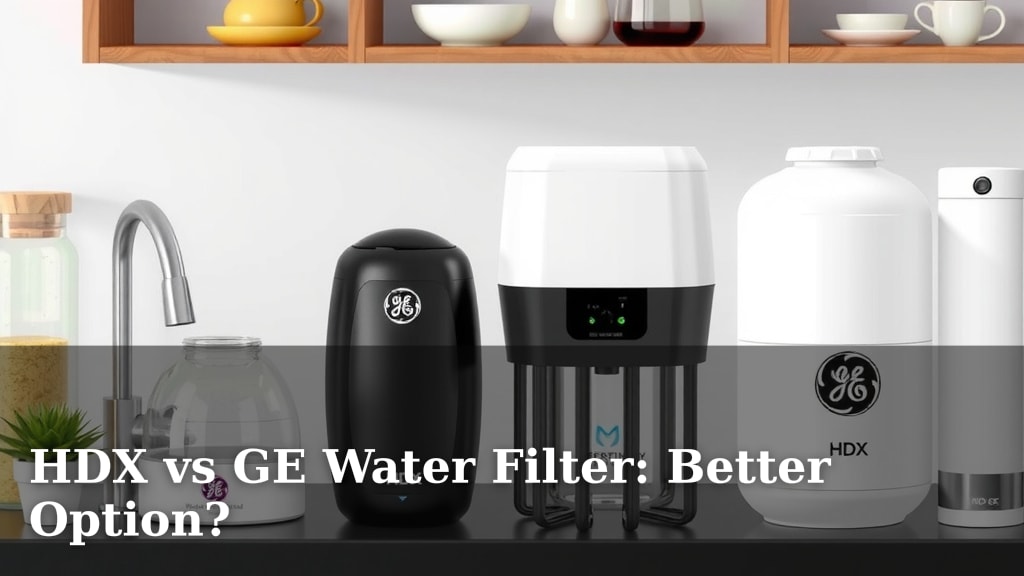
HDX vs GE Water Filter: Better Option?
When choosing between HDX and GE water filters, there isn’t one single “better” option for everyone. Both brands offer effective filtration, but your best choice depends on your specific needs, budget, and the type of contaminants you want to remove from your water. We found that GE often leads in advanced multi-stage filtration, while HDX provides a strong balance of performance and affordability.
You’re likely looking to improve your water quality, and that’s a great goal! Understanding the differences between filter types and brands is key. We’ve researched how both HDX and GE filters tackle common water issues, from chlorine taste to lead reduction, helping you make a well-informed decision for your household. Think of it as picking the right tool for a cleaner drink.
- HDX and GE filters both improve water taste and safety.
- GE often uses more advanced, multi-stage filtration methods.
- HDX typically offers a more budget-friendly choice.
- Your specific water concerns (e.g., lead, sediment) should guide your pick.
- Check certifications like NSF for verified performance claims.
Let’s dive into the specifics of each brand to help you decide which water filter is the perfect fit for your home.
Choosing the Right Water Filter: HDX vs. GE
When you’re looking to improve the water you drink, both HDX and GE filters come to mind. But which one truly fits your needs? We found that GE often uses more sophisticated filtration technologies. HDX, on the other hand, tends to be a more budget-friendly choice. Your decision really boils down to what contaminants you’re most concerned about and how much you’re willing to spend. Think of it like choosing between a reliable workhorse and a feature-packed sports car for your kitchen sink.
Understanding Basic Water Filtration
At its core, a water filter’s job is simple: remove unwanted stuff from your tap water. This can include things like chlorine, which affects taste and odor. It can also involve sediment, rust, and sometimes even heavier metals like lead. Many filters use activated carbon, which is like a sponge for chemicals. Others use physical barriers to trap larger particles. We found that understanding these basic principles helps you see why one filter might be better for your specific situation.
Activated Carbon: The Common Hero
You’ll see activated carbon in many filters, from both HDX and GE. This material is treated to be incredibly porous. This large surface area allows it to trap chlorine and other organic compounds. Many experts agree it’s excellent for improving water’s taste and smell (CDC). It’s a workhorse for everyday water improvement.
Sediment Filters: Catching the Gritty Bits
Some water has visible particles like sand or rust. Sediment filters use a physical barrier, like a fine mesh or paper-like material. They catch these larger particles before they can clog finer filter stages or make your water look cloudy. We found that homes with older pipes or well water often benefit the most from good sediment filtration.
How HDX Filters Perform
HDX filters are often found at major home improvement stores. They are known for offering a good balance between performance and affordability. Many consumers choose HDX when they need a reliable filter without breaking the bank. We found that they typically focus on common filtration needs, like reducing chlorine taste and odor.
Key Features of HDX Filters
HDX filters often use activated carbon and simple physical filtration. This makes them effective for many common tap water concerns. You’ll find them designed for various applications, from refrigerator water lines to pitcher filters. Many HDX models are designed to be easy to install and replace. This convenience is a big plus for many households.
Affordability Factor
One of the biggest draws for HDX is its price point. You can often get a set of replacement filters for less than half the cost of some premium brands. We found that if your main goal is to improve the taste and odor of your water, HDX can be a very smart and economical choice. It’s like getting a solid, dependable tool at a great price.
Limitations to Consider
While HDX filters are good, they might not always offer the most advanced filtration. If your water has specific concerns, like high levels of lead or a wide range of chemical contaminants, you might need something more specialized. We found that some HDX models don’t always specify multi-stage filtration as clearly as other brands. Always check the product details for what each filter is certified to reduce.
Exploring GE Water Filters
GE water filters, on the other hand, often boast more advanced filtration technologies. They are frequently seen as a choice for those who want superior water purification. GE tends to invest more in research and development for their filtration systems. We found that this often translates to more sophisticated filter designs.
GE’s Multi-Stage Filtration Approach
Many GE filters use a multi-stage process. This means water passes through several layers of filtration. Each stage targets different types of contaminants. For example, one stage might remove sediment, the next might tackle chlorine, and a further stage could reduce lead or other heavy metals. We found that this layered approach can lead to cleaner and purer water.
Advanced Contaminant Reduction
GE filters are often certified to reduce a wider range of contaminants than standard filters. This can include things like pharmaceuticals, pesticides, and volatile organic compounds (VOCs). Many GE refrigerator filters, for instance, are designed to meet stringent NSF standards for reducing specific harmful substances. It’s like having a whole team of specialists working to clean your water.
Higher Price Point
With advanced technology comes a higher cost. GE filters typically come with a steeper price tag. Replacement filters can be more expensive than their HDX counterparts. We found that while the upfront cost might be higher, many users feel the improved water quality and peace of mind justify the expense. It’s an investment in your health and your home.
Direct Comparison: HDX vs. GE at a Glance
To help you visualize the differences, let’s look at how they stack up in a few key areas. Remember, your priorities will guide your final decision.
| Feature | HDX | GE |
|---|---|---|
| Price | Generally more affordable | Typically higher price point |
| Filtration Technology | Often single-stage, activated carbon focus | Frequently multi-stage, more advanced |
| Contaminant Reduction | Good for chlorine, taste, odor, basic sediment | Broader range, including lead, VOCs, specific chemicals |
| Availability | Widely available in home improvement stores | Available in appliance stores, online, and some big box retailers |
| Certifications | Varies by model, check for NSF | Often certified for specific contaminant reduction (e.g., NSF 42, 53) |
Making Your Final Choice
So, which filter is right for you? It’s not about declaring a winner, but finding the perfect fit for your household. We found that a little bit of detective work goes a long way.
- Check Your Water Report: If you can, get a water quality report for your area. This will tell you exactly what’s in your tap water.
- Identify Your Concerns: Are you mostly bothered by chlorine taste? Or are you worried about lead or other specific chemicals?
- Consider Your Budget: How much are you comfortable spending on replacement filters?
- Look for Certifications: Always seek out filters certified by NSF International. This means they’ve been tested and verified to do what they claim (NSF International).
- Read Reviews: See what other users are saying about specific filter models.
If you’re on a budget and primarily want better tasting water, an HDX filter is likely a solid choice. If you have specific health concerns about your water, or simply want the most advanced filtration possible and the budget allows, a GE filter might be your best bet. Either way, you’re taking a great step towards cleaner, healthier water for your family.
Conclusion
Ultimately, selecting between HDX and GE water filters comes down to your personal priorities. We found that HDX offers a fantastic budget-friendly solution for improving basic water quality, focusing on taste and odor reduction. If your main goal is affordability and straightforward filtration, HDX is a smart pick. For those seeking advanced purification and a broader spectrum of contaminant removal, GE filters often provide the technological edge, though at a higher cost. Your best next step is to assess your specific water concerns and budget. Then, check the NSF certifications on any filter you consider. Making an informed choice ensures you get the cleanest, most enjoyable water possible for your home.
Frequently Asked Questions
Which filter brand is easier to find and replace?
HDX filters are often widely available at major home improvement stores, making them generally easy to find. Both brands typically design their filters for straightforward installation and replacement, especially for refrigerator models. Always check the specific model to ensure it fits your appliance.
Are GE filters really worth the extra cost?
GE filters often use multi-stage filtration, which can remove a wider range of contaminants, including lead and VOCs. We found that if your water has specific concerns beyond taste and odor, or if you desire a higher level of purity, the extra cost for GE filters can be justified for the enhanced performance and peace of mind.
Can HDX filters remove lead from my water?
Some HDX filters may offer lead reduction, but it’s not a universal feature across all their models. You must carefully check the product packaging and specifications for certifications like NSF/ANSI Standard 53, which specifically tests for lead removal. Always verify the filter’s claims.
How often should I replace my water filter, regardless of brand?
Replacement frequency typically depends on the filter’s capacity and your water usage. Most refrigerator filters need replacing every six months, while pitcher filters might last two months. Always refer to the manufacturer’s guidelines for your specific filter model to ensure optimal performance and safety.
What does NSF certification mean for water filters?
NSF certification means an independent organization has tested and verified that the water filter meets strict public health standards for safety and performance. Look for certifications like NSF/ANSI Standard 42 for aesthetic effects (like chlorine taste and odor) and Standard 53 for health effects (like lead or cysts).

![10 Best In Home Water Filter [2026]](https://waterans.com/wp-content/uploads/2026/07/10-best-in-home-water-filter-2026-featured-768x432.jpg)