
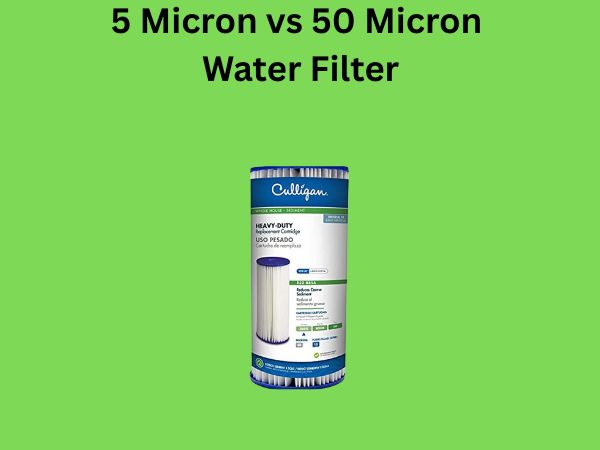
5 Micron vs 50 Micron Water Filter: Understanding Fine vs Coarse Filtration
When you’re standing in front of water filter options at your local store, you might feel like you’re deciphering a foreign language. What exactly does “5 micron” or “50 micron” mean? Why should you care about these tiny measurements? I’m here to break down the mystery and help you understand which filtration level actually makes sense for your specific water needs.
The choice between a 5 micron and a 50 micron water filter isn’t just about picking a number—it’s about understanding what you’re trying to remove from your water and what your household actually requires. Let me walk you through this journey so you can make an informed decision that protects your health and doesn’t waste your money
Understanding Microns: What They Really Mean
Let’s start with the fundamental question: what’s a micron? A micron is one millionth of a meter, or to put it in perspective, it’s about 1/25,000th of an inch. Think of it this way—if a human hair were the size of a football field, a micron would be roughly the size of a marble sitting on that field. That’s how incredibly small we’re talking about here.
When someone tells you a filter is “5 micron,” they’re saying it can catch particles that are 5 micrometers in size or larger. Similarly, a 50 micron filter catches particles 50 micrometers or larger. The lower the number, the finer the filtration, and the smaller the particles your filter can trap.
Why Size Matters in Filtration
The size of particles you’re filtering matters tremendously because different contaminants come in different sizes. Some are visible to the naked eye, while others require a microscope to see. Understanding what size contaminants you’re dealing with helps you choose the right filtration level for your situation.
Here’s where it gets interesting: not all water requires the same level of filtration. Your tap water quality depends on your location, your water source, and the condition of your plumbing infrastructure. Someone living in an area with well water might need finer filtration than someone on a city water system, or vice versa.
The Basics of Water Filtration Technology
Water filtration works on a pretty straightforward principle—you push water through a barrier that traps unwanted particles while letting clean water pass through. But the mechanics of how this happens, and what size particles the barrier can trap, is where the differences become important.
Different filtration media work in different ways. Some use mechanical barriers—think of them like a net with specific-sized holes. Others use activated carbon or other materials that work through adsorption, which means particles stick to the surface of the filter media. Understanding which type of filter you’re dealing with helps explain why micron ratings matter.
Sediment Filtration Explained
When we talk about micron ratings, we’re usually discussing sediment filtration. Sediment includes things like dirt, sand, rust particles, and silt. These are the visible or semi-visible particles that cloud your water and make it look unappealing. Sediment filters are the first line of defense in most water treatment systems.
The sediment you might find in water varies wildly depending on your situation. Well water typically has more sediment than municipal water, but even city water can contain sediment from aging pipes, construction, or water main breaks in your area.
50 Micron Filters: The Coarse Approach
A 50 micron filter is what I call a “broad strokes” approach to water filtration. It’s designed to catch the bigger particles—the ones you can actually see without magnification. If your water is noticeably cloudy, discolored, or has visible particles, a 50 micron filter will make a significant improvement.
Think of a 50 micron filter like the first sieve when gold panning. It catches the big rocks and pebbles, letting the finer material continue downstream. This level of filtration handles obvious sediment problems and protects your pipes and appliances from larger particle damage.
What 50 Micron Filters Excel At
These filters are particularly effective at:
- Removing visible sediment and cloudiness from water
- Catching larger rust particles from old pipes
- Filtering out sand and silt from well water
- Protecting downstream water systems and appliances
- Handling high-volume water demands without excessive pressure loss
- Serving as an excellent pre-filter before finer filtration stages
50 micron filters are workhorses in multi-stage filtration systems. They do the heavy lifting of removing obvious contaminants, which means your more expensive fine filters don’t get clogged as quickly. This extends the life of your entire filtration system.
The Advantages of Coarse Filtration
Coarse filtration offers several practical benefits. The water flows through much more easily, which means you maintain better water pressure throughout your home. If you’ve ever had a fine filter that made your shower feel like a trickle, you understand the importance of flow rate.
Additionally, 50 micron filters last considerably longer because they’re not trapping the finest particles. This means fewer replacements, lower maintenance costs, and less hassle over time. For many homeowners, this simplicity is a significant advantage.
5 Micron Filters: The Fine Approach
A 5 micron filter takes a much more aggressive approach to water purification. It catches particles that are ten times smaller than what a 50 micron filter can handle. This means you’re removing finer sediment, smaller rust particles, and potentially some microscopic organisms that you’d never see without a microscope.
These filters are like the fine-toothed comb after you’ve already used the regular comb. They catch the subtle impurities that might still be present after coarser filtration stages.
What 5 Micron Filters Are Designed For
5 micron filters excel at removing:
- Fine sediment and silt particles
- Small rust and mineral particles
- Fine sand particles
- Some bacteria and protozoans (depending on filter type)
- Turbidity-causing particles invisible to the naked eye
- Particles that contribute to bad taste and odor
If you’re looking for truly clear, clean water with minimal fine particles, a 5 micron filter delivers results. This level of filtration is often recommended for people with sensitive palates, those who notice sediment even in treated water, or households concerned about microscopic contaminants.
The Benefits of Fine Filtration
Fine filtration gives you peace of mind that you’re catching smaller contaminants that coarser filters miss. For people with compromised immune systems, elderly family members, or young children, this extra level of protection can be important.
Fine filtration also improves water clarity and taste noticeably. Many people who switch to 5 micron filtration report that their water tastes fresher and looks clearer, even if they didn’t realize it needed improvement before.
Key Differences Between 5 and 50 Micron Filters
Let me lay out the major differences between these two filter types so you can compare them directly:
Particle Capture Size
The most obvious difference is that a 5 micron filter catches particles ten times smaller than a 50 micron filter. This means the 5 micron filter is removing particles that the 50 micron filter lets pass through completely.
Water Flow Rate
Here’s where physics gets involved. The finer your filter, the more resistance the water experiences passing through. A 50 micron filter might deliver 15-20 gallons per minute, while a 5 micron filter might only deliver 5-10 gallons per minute. This directly impacts your shower pressure and fill times for washing machines.
Filter Lifespan
A 5 micron filter clogs faster because it’s trapping more particles. You might need to replace it every 3-6 months, whereas a 50 micron filter might last 6-12 months. This frequency difference adds up in maintenance costs.
Cost per Replacement
Generally, 5 micron filters cost slightly more per unit than 50 micron filters, though the difference isn’t dramatic. When you factor in replacement frequency, the total cost of ownership becomes more significant.
Installation Location
50 micron filters work well as point-of-entry filters for your whole house. 5 micron filters are often installed as point-of-use filters at a single faucet or in a more compact system because of their higher maintenance requirements.
Contaminants Each Filter Can Remove
Understanding what each filter actually removes helps you decide which matches your water quality concerns:
Common Contaminants Removed by 50 Micron Filters
A 50 micron filter handles the obvious stuff. If you turn on your water and it looks cloudy or has visible particles, this filter will fix that problem immediately. Visible sediment, large rust flakes, sand, and silt all get trapped by coarse filtration.
This level of filtration also protects your appliances. Water heaters, dishwashers, and washing machines all appreciate sediment pre-filtration because it prevents damage to their internal components.
What 5 Micron Filters Remove That 50 Micron Filters Miss
The finer filtration catches particles you can’t see. Some bacteria and some protozoan cysts fall into this size range. Fine sediment that causes slight cloudiness gets removed. Very small rust particles that create a slight reddish tint disappear.
5 micron filtration is where you start getting into territory that requires you to trust the science because you can’t see the improvements directly. But people report cleaner taste, clearer appearance, and fewer sediment issues in their water when they use 5 micron filters.
Flow Rate and Water Pressure Considerations
This is the practical reality many people don’t consider until they install a fine filter and suddenly their shower feels weak. Let’s talk about what actually happens to your water pressure.
Understanding Pressure Drop
Every filter creates some resistance to water flow. Water has to push through the filter media, and this creates what’s called pressure drop. A 50 micron filter creates minimal pressure drop because its pores are relatively large. A 5 micron filter creates significantly more pressure drop because the pores are much smaller.
In practical terms, if your incoming water pressure is 60 psi (pounds per square inch), a 50 micron filter might reduce it to 55-58 psi—barely noticeable. A 5 micron filter might reduce it to 45-50 psi—now you’re noticing a difference in your shower.
Gallons Per Minute Differences
Most residential water filters are rated by how many gallons per minute they can deliver. A typical 50 micron whole-house filter delivers 15-20 gpm. A 5 micron filter typically delivers 5-10 gpm. If you have multiple people using water simultaneously, this difference becomes apparent.
Imagine running a shower and someone starts a load of laundry. With a 50 micron filter, the pressure stays decent in both places. With a 5 micron filter, you might experience noticeable pressure reduction. This is why 5 micron filters are often used as point-of-use filters rather than whole-house solutions.
Cost Comparison and Replacement Frequency
Let’s talk money because that’s often the real deciding factor for most households.
Initial Filter Costs
A quality 50 micron filter cartridge typically costs between $20-40. A comparable 5 micron filter usually runs $25-50. The difference isn’t huge for a single filter, but multiply that by the number of replacements you’ll make over several years, and it adds up.
Replacement Frequency Impact
Here’s where the real cost difference shows up. If a 50 micron filter lasts 9 months and costs $30, you’re spending about $40 per year on replacements. If a 5 micron filter lasts 4 months and costs $35, you’re spending about $105 per year. That’s a difference of roughly $65 annually for just one filter.
Over a five-year period, choosing the appropriate filtration level can save you several hundred dollars in filter replacement costs.
System Lifespan Considerations
Using a 50 micron filter as a pre-filter actually extends the life of your whole system because it prevents finer filters downstream from clogging as quickly. This staged approach is more economical long-term than trying to do all the work with a single 5 micron filter.
How to Determine Your Household Needs
The best filter for your home depends on your specific situation. Let me help you figure out what you actually need:
Assess Your Water Quality
Start by getting your water tested. Many municipal water departments provide free testing, and you can buy inexpensive test kits from hardware stores. Find out what’s actually in your water before assuming you need fine filtration.
Run a simple visual test too. Fill a clear glass with tap water and let it sit for a few minutes. Do particles settle to the bottom? Does the water look cloudy? These observations tell you something about your sediment levels.
Consider Your Water Source
Well water typically has more sediment than municipal water, so well users usually benefit from finer filtration. Municipal water is already treated, so many city residents find 50 micron filtration sufficient for their needs.
Think About Your Plumbing Age
If you live in an older home with older pipes, you likely have rust and corrosion particles in your water. This might justify finer filtration. Newer homes with modern plumbing might get away with coarser filtration.
Evaluate Your Health Situation
Do you have anyone in your household with a compromised immune system, or very young children?



![7 Best Ten Inch Water Filter [2026]](https://waterans.com/wp-content/uploads/2026/06/7-best-ten-inch-water-filter-2026-featured-768x432.jpg)
