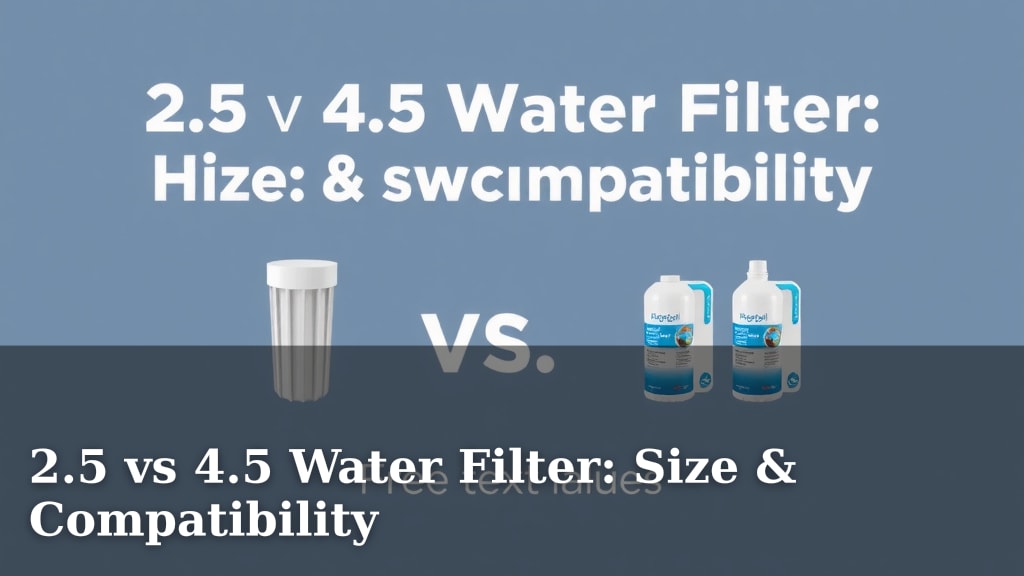
2.5 vs 4.5 Water Filter: Size & Compatibility
Choosing between a 2.5-inch and a 4.5-inch water filter depends mostly on your filter housing size and the flow rate you need. A 4.5-inch filter, often called a “Big Blue” filter, is physically larger and can filter more water at a faster rate than a standard 2.5-inch filter. You can’t just swap them; they need to fit your existing housing.
We found that the size of your water filter is a major factor in its capacity and lifespan. Larger filters generally last longer and handle higher volumes of water. Understanding your current system’s compatibility is key to making the right choice for your home’s water filtration needs.
- 4.5-inch filters are bigger and filter more water faster.
- 2.5-inch filters are standard size, good for smaller needs.
- Compatibility with your filter housing is most important.
- Larger filters typically last longer and reduce changes.
Let’s dive into the specifics of how these sizes differ and which one is the best fit for your setup.
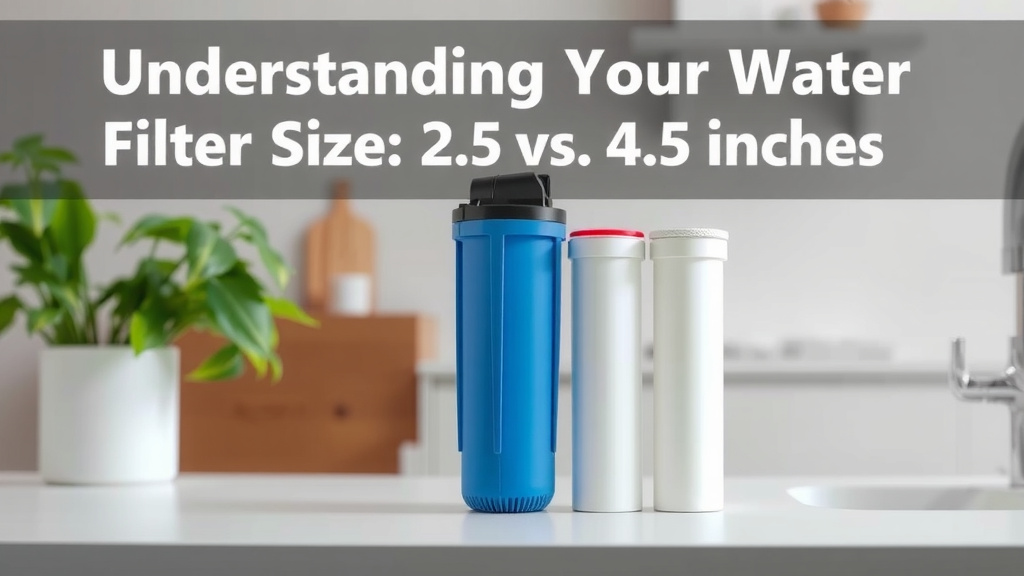
Understanding Your Water Filter Size: 2.5 vs. 4.5 Inches
When it comes to choosing the right water filter, size really does matter. You’ve probably seen water filters referred to by their diameter, typically 2.5 inches or 4.5 inches. This might seem like a small detail, but it has a big impact on your filtration system. Think of it like choosing shoes – a size 7 won’t fit a size 10 foot, and the same applies here. You need to match the filter to your existing housing. This is the most critical factor when deciding between a 2.5-inch and a 4.5-inch filter.
We found that the diameter isn’t just about physical space. It directly influences how much water the filter can hold and, therefore, how much it can filter. A wider filter means more filter media inside, which can lead to better performance and longer life. Let’s break down what each size means for your home’s water.
The Standard 2.5-Inch Water Filter: A Common Choice
The 2.5-inch filter is often considered the standard size in many residential water filtration systems. You’ll likely find these in undersink filters, RV water systems, and some smaller whole-house setups. They’re compact and efficient for everyday needs. If you have a standard filter housing, chances are it’s designed for a 2.5-inch diameter filter.
When to Consider a 2.5-Inch Filter
You might be perfectly happy with a 2.5-inch filter if:
- Your current filter housing is designed for this size.
- Your water usage is moderate, and you don’t need extremely high flow rates.
- You prefer smaller, more easily replaceable cartridges.
- You’re looking for a cost-effective solution for basic filtration needs.
Many experts agree that for standard households with typical water quality concerns, a 2.5-inch filter can be perfectly adequate. The key is ensuring it’s the right fit for your system and meets your specific filtration goals, like removing chlorine or sediment.
The “Big Blue” 4.5-Inch Water Filter: For Higher Demands
The 4.5-inch filter, affectionately known as “Big Blue,” is a significantly larger cartridge. This extra width means it contains much more filter media. This is a big deal for a few reasons. More media generally means a higher capacity to trap contaminants and a longer lifespan before needing replacement. It also allows for a greater volume of water to pass through more easily.
Benefits of the Larger 4.5-Inch Filter
If you’re experiencing high water usage or have specific filtration challenges, a 4.5-inch filter could be your best bet. We found that these filters are often chosen for:
- Whole-house filtration systems where larger volumes of water need treatment.
- Homes with high water demand, such as larger families or households with multiple bathrooms.
- Situations where you need a higher flow rate without sacrificing filtration effectiveness.
- Filtering water with higher levels of sediment or other contaminants, as the larger surface area can handle more.
A common recommendation from plumbing professionals is that for whole-house applications, the increased capacity of a 4.5-inch filter often translates to less frequent filter changes. This can save you time and money in the long run.
Compatibility: The Most Important Factor
Now, let’s talk about the elephant in the room: compatibility. You cannot simply put a 4.5-inch filter into a housing designed for a 2.5-inch filter. They are physically different sizes and won’t fit together. Trying to force it could damage your filter housing and lead to leaks. It’s like trying to fit a square peg into a round hole – it just doesn’t work!
How to Check Your Filter Housing
Before you buy any filter, take a look at your current system. You’ll need to identify the size of your filter housing. Most housings will have this information stamped on them or listed in the owner’s manual. Look for terms like “10” x 2.5″”, “20” x 2.5″”, “10” x 4.5″”, or “20” x 4.5″”.
The first number (e.g., 10″ or 20″) refers to the length of the filter, and the second number (e.g., 2.5″ or 4.5″) refers to the diameter. You need to match the diameter of the filter you purchase to the diameter your housing is designed to accept.
What If You Need a Different Size?
If you have a 2.5-inch housing but wish you could use the benefits of a 4.5-inch filter, you generally can’t just swap the filter. You would need to replace the entire filter housing with one that is designed for a 4.5-inch “Big Blue” filter. This is a more involved process and might require a plumber. It’s often easier to stick with the size your system was built for.
| Feature | 2.5-Inch Filter | 4.5-Inch Filter (“Big Blue”) |
|---|---|---|
| Diameter | 2.5 inches | 4.5 inches |
| Capacity | Lower | Higher |
| Flow Rate Potential | Generally Lower | Generally Higher |
| Filter Media Surface Area | Smaller | Larger |
| Common Use Cases | Undersink, RVs, smaller whole-house | Whole-house, high-demand applications |
| Lifespan (Typical) | Shorter | Longer |
Length Matters Too: 10-Inch vs. 20-Inch Filters
While diameter is a primary difference, filter length is also crucial for compatibility. Filters commonly come in 10-inch and 20-inch lengths. Your filter housing will be designed for a specific length, usually matching the housing itself. You cannot put a 20-inch filter into a 10-inch housing. This is why we always stress checking what your system accommodates.
Matching Length and Diameter
You’ll commonly find filters in these combinations:
- 10″ x 2.5″
- 20″ x 2.5″
- 10″ x 4.5″
- 20″ x 4.5″
It’s rare to find a 4.5-inch diameter filter in a 10-inch length, as the “Big Blue” name implies a substantial size, often associated with longer cartridges for maximum capacity. Always ensure both dimensions match what your housing requires.
Making the Right Choice for Your Home
So, how do you decide between a 2.5-inch and a 4.5-inch filter? It boils down to a few simple checks:
- Check your existing filter housing. This is non-negotiable. Find the size stamped on it or in the manual.
- Consider your water usage. Are you a single person or a large family? High usage might favor a 4.5-inch filter for its higher capacity.
- Think about your water quality. If you have significant sediment or contaminants, a larger filter can often handle them better and longer.
- Evaluate your flow rate needs. Do you ever feel like your water pressure drops significantly when the filter is in use? A 4.5-inch filter might offer better flow.
- Factor in maintenance. Larger filters typically last longer, meaning fewer changes per year.
We found that most homeowners can get excellent results with a standard 2.5-inch filter if their needs are typical. However, if you’re looking to upgrade your whole-house system or tackle specific water issues, the 4.5-inch “Big Blue” offers some serious advantages in terms of capacity and longevity.
Conclusion
Choosing the right water filter size, 2.5-inch or 4.5-inch, is all about matching your filter housing and your home’s needs. We found that a 4.5-inch “Big Blue” filter offers greater capacity and potentially longer life for high-demand situations. However, if your current setup is for a standard 2.5-inch filter, sticking with it is usually the most practical choice. Always check your housing’s dimensions first. This simple step ensures your filter works efficiently and prevents costly mistakes.
Your next step is to confidently identify the size stamped on your existing filter housing. Armed with that knowledge, you can confidently select the filter that best suits your home’s water filtration requirements and maintenance schedule.
Frequently Asked Questions
Can I put a 4.5-inch filter in a 2.5-inch housing?
No, you cannot. A 4.5-inch filter is physically too large to fit into a housing designed for a 2.5-inch filter. Attempting to force it could damage your equipment and cause leaks. You must use a filter that matches your housing’s diameter specification.
How do I know if I need a 4.5-inch filter instead of a 2.5-inch?
Consider your household’s water usage and any specific water quality concerns. If you have high water demand, experience frequent filter changes with your current 2.5-inch filter, or deal with significant sediment, a 4.5-inch filter might offer better performance and longevity.
Will a 4.5-inch filter improve my water pressure?
A larger 4.5-inch filter generally allows for a higher flow rate due to more filter media and a wider path for water. If you’ve noticed a drop in water pressure with your current 2.5-inch filter, upgrading to a compatible 4.5-inch housing and filter could potentially improve your flow rate.
How often do I need to replace a 4.5-inch filter compared to a 2.5-inch filter?
We found that larger 4.5-inch filters typically have a higher capacity for trapping contaminants. This means they generally last longer than 2.5-inch filters, requiring less frequent replacement. However, actual lifespan depends on your water quality and usage.
What does the length of the filter (e.g., 10-inch vs. 20-inch) mean for compatibility?
The length of the filter, just like the diameter, must match your filter housing. Your housing will be designed for either a 10-inch or a 20-inch long filter. You cannot put a 20-inch filter into a 10-inch housing, and vice-versa. Always check both the length and diameter.